
As geopolitical divisions grow, opportunities for meaningful cross-border collaborations are more important than ever. The UK Committee for International Hydrology’s newly released policy brief, “Accelerating Multilateral Action for Global Water Security,” emphasises the urgent need for strengthened collective action to tackle the world’s rapidly escalating water-related challenges.
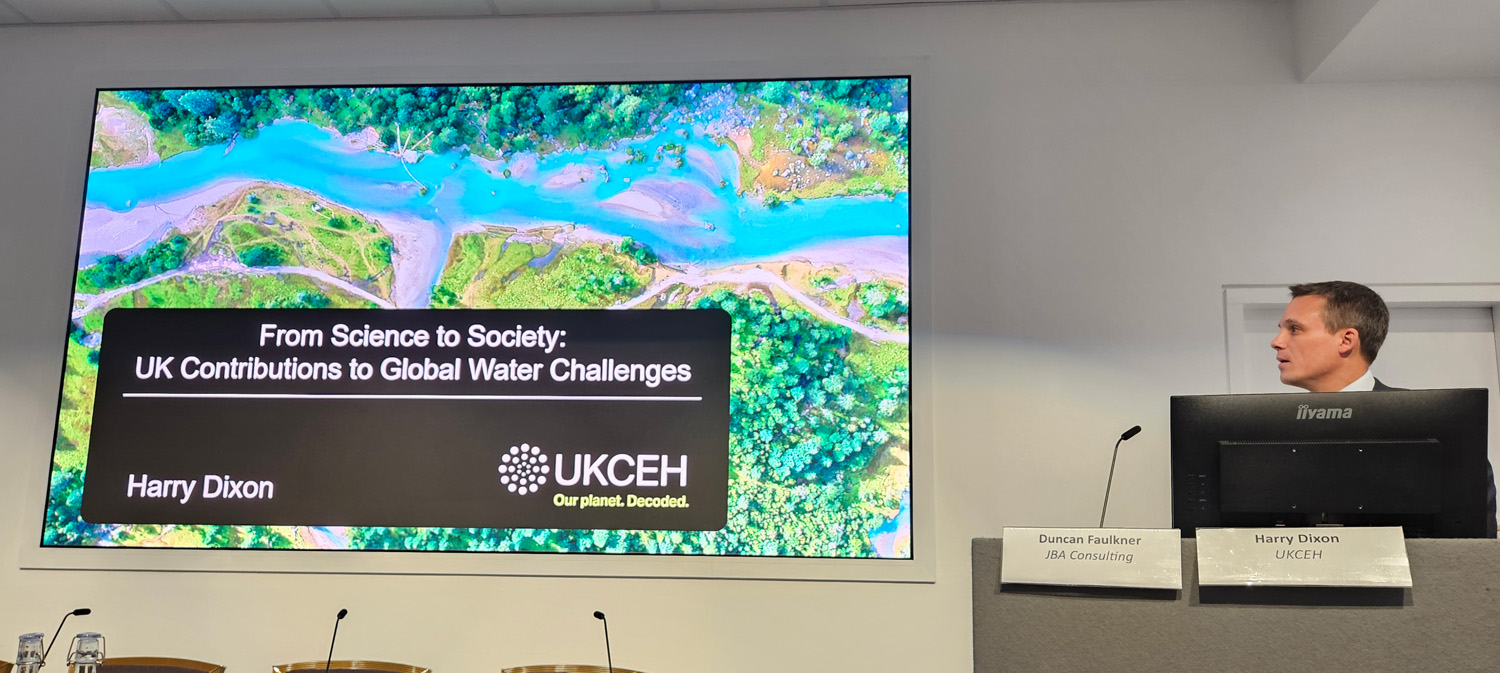
The brief was launched during the December 2025 conference ‘From Science to Society: UK Contributions to Global Water Challenges,’ a joint event hosted by UKCEH and the British Hydrological Society, at the Institution of Civil Engineers in London.
Marking the 50th anniversary of UNESCO’s Intergovernmental Hydrological Programme, both the event and the brief highlight how scientific evidence can better connect with practitioners, decision-makers, educators, and communities to deliver more equitable and sustainable outcomes in a rapidly changing world.
They share a central message: sustainable solutions to global water challenges don’t come from working in silos - they require long-term, collaboration across borders, sectors, disciplines, and scales.
A growing global crisis, a shared responsibility
Despite decades of progress, water security remains one of the greatest challenges of our time. Climate change, population growth, land-use changes, and rising pollution levels are all accelerating a global water crisis. Today, 2.1 billion people still lack access to safe drinking water and by 2050, floods, droughts and storms could cause $5.6 trillion in cumulative losses to the global economy.
The policy brief highlights how the scale and complexity of the crisis requires coordinated, approaches that bring together science, policy, industry, and local communities to accelerate equitable, evidence-based solutions need to transform water governance across scales. It calls for strengthened multilateral action to achieve a water-secure future for all.
It sets out recommendations for the UK and international organisations on how to enhance cooperation and accelerate progress through multilateral partnerships.
Key recommendations for the UK include:
- Leveraging multilateral investment and partnerships to align global water initiatives with UK priorities.
- Mobilising UK expertise in research, education and industry to drive innovation and impact at scale.
- Encouraging inclusive international scientific partnerships, using long-term frameworks to deliver sustainable outcomes.
- Co-investing in shared hydrological infrastructure, from global observatories to digital platforms that support real-time collaboration.
- Empowering young people to shape the next generation of water research, innovation and policy.
For international organisations, the brief calls for:
- Embedding water within climate, biodiversity, health and energy agendas.
- Strengthening coordination across global agencies to reduce fragmentation.
- Providing coherent global leadership by convening nations and setting shared priorities.
- Broadening engagement with civil society, NGOs and the private sector to co-create transformative solutions.
- Developing a shared vision for global water science infrastructure with the ambition seen in climate and space science.
Together, these recommendations emphasise the need for system-level approaches that can be scaled, replicated, and sustained.
Learn more about the UK Committee for International Hydrology and read the policy brief.
Driving forward a shared vision
The conference underscored a strong sense of collective responsibility and opportunity, and provided an ideal setting for launching the brief - bringing together researchers, policymakers and practitioners to explore how the UK can contribute more effectively to global water science (through international organisations such as UNESCO’s IHP, WMO, and IAHS). The event provided a valuable platform to align priorities, share expertise, and strengthen the connections needed to co-create solutions for a water-secure future.
Both the conference and the policy brief were delivered as part of UKCEH’s national role convening environmental science communities and helping set national agendas to coordinate and maximise the impact of UK science on the global stage.
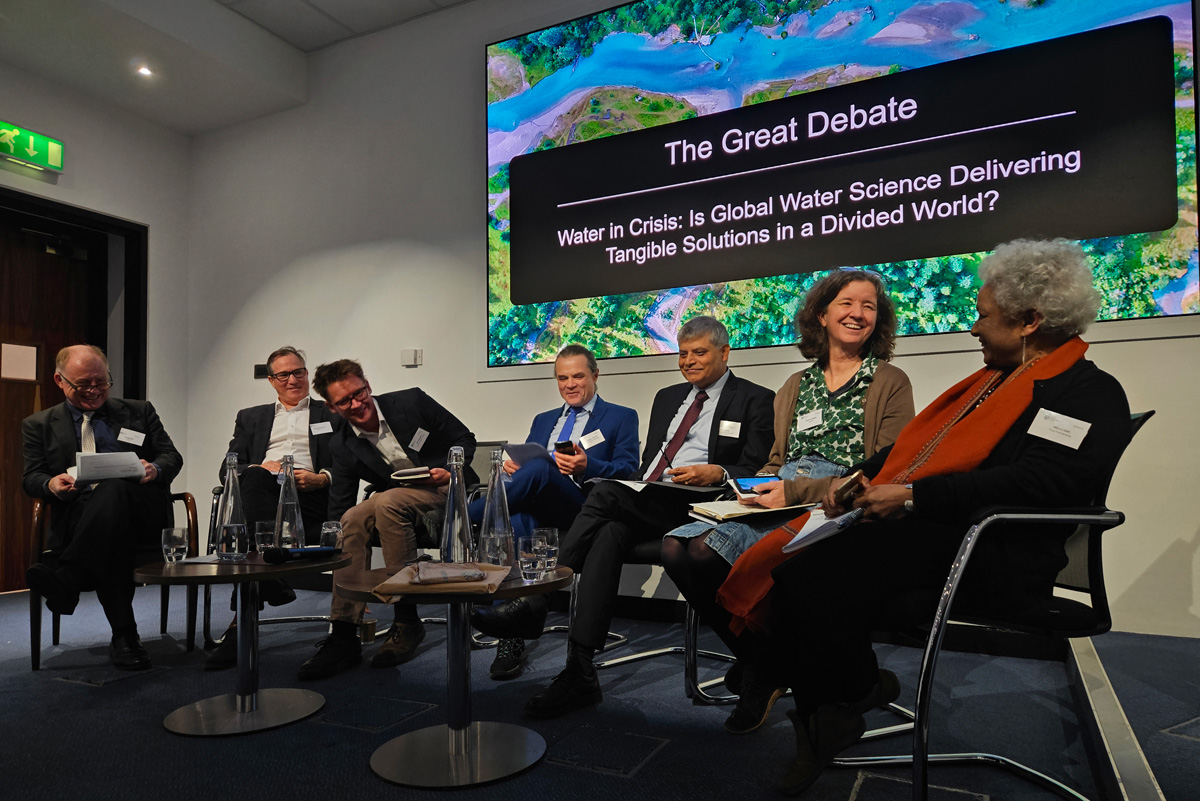
Participants highlighted how coordinated UK contributions to such initiatives, grounded in scientific excellence, can inform global decisions and strengthen adaptation efforts. The UK Committee for International Hydrology (UKCIH) policy brief provides a timely roadmap for the next decade of global action. As a long-standing leader in hydrological science and coordinator of UK input into some of the key international initiatives related to water, UKCEH sits at the heart of this effort - connecting world-class research, trusted evidence, and international partners to deliver meaningful impact.
We look forward to continuing these vital conversations as UKCEH builds on its long-established role in coordinating input to global water initiatives to advance water secure future for all.
