Professional summary
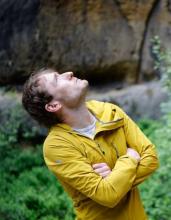
Bede (“bead”) is a Quantitative Ecologist within the Biodiversity and Land Use group based in Lancaster. His work and research focus on plant ecology, sustainable land management (small & large scale), anthropogenic drivers of change, ecological modelling, and fieldwork. His scientific interest is centred around understanding changes in ecosystems and habitats caused by anthropogenic drivers, and how these affect biodiversity. But most importantly how land management can mitigate the negative impacts of global change. He therefore is interested in developing research with practitioners directly addressing real-world issues, e.g. agroecology and regenerative agriculture as means to promote soil health and biodiversity.
Through previous work Bede also has experience in remote/‘deep’ fieldwork (remote Caribbean islands, the Antarctic, Alpine Cols, and leading fieldwork campaigns across every nation of the UK).
Bede spends the remainder of his working time co‑directing a forestry CIC on a 16‑ha site in the South Downs National Park, giving him additional pragmatic appreciation of land management.
Bede obtained a forest ecology BSc in 2015; then worked for Royal Botanic Gardens Kew as a fieldwork officer for 2.5 years, before starting a PhD with Bangor University & UKCEH finishing in 2022. Then after a year deployed with the British Antarctic Survey, and a year managing a Biodiversity Net Gain baselining project for Gascoyne Estates he returned to UKCEH in early 2025 to take up his current role.
LinkedIn: https://www.linkedin.com/in/bedewest/
Google Scholar: https://scholar.google.co.uk/citations?user=bF3rmiYAAAAJ&hl=en
ResearchGate: https://www.researchgate.net/profile/Bede-West-2