23 April – 24 April 2026, Bangor, Gwynedd, Wales.

Kat Papatheodorou, Trent University Peterborough, Ontario

I arrived in Bangor the evening before the 2026 annual Community of Air Pollution Effects Researchers (CAPER) meeting. I spent that evening taking in the beautiful landscape outside my hotel, realizing the eight and half hour flight from Toronto, Canada, was well worth it. As this was the first conference of my academic career, I had very few expectations going into the first day of CAPER.

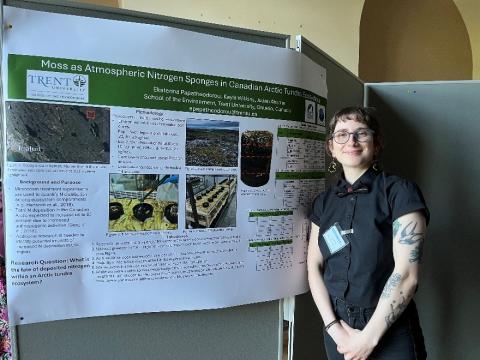
Day 1 kicked off with exciting presentations, with topics ranging from policy to new approaches to monitoring air pollution. The presentations were thorough, but they acted as a stepping stone for deeper conversations among fellow air pollution researchers – for instance, on suitable restoration and conservation goals in a changing environment. After the first round of presentations, everyone swiftly made their way outside with a tea to discuss their projects, while also addressing the unseasonably warm weather making us all a little reluctant to go back inside. After a few rounds of presentations, it was time for posters. There was a good amount of interest in my poster, likely due to the topic. My poster title, “Moss as atmospheric nitrogen sponges in Canadian Arctic tundra ecosystems,” field site map, and gloomy photos of the tundra made it very clear that my research was conducted outside the UK. I received kind comments and a lot of questions related to my work in the Canadian Arctic. After the last round of presentations, it was time for dinner. Conversations shifted from purely academic to comparing classic foods in the UK and Canada (of course both sides felt they had the best dishes).
Image
Figure 1 CAPER day 1. Poster presentation.

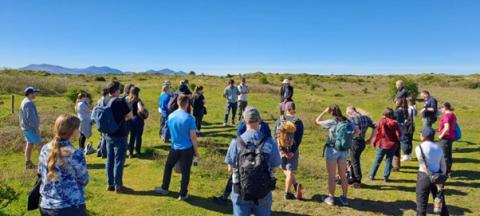
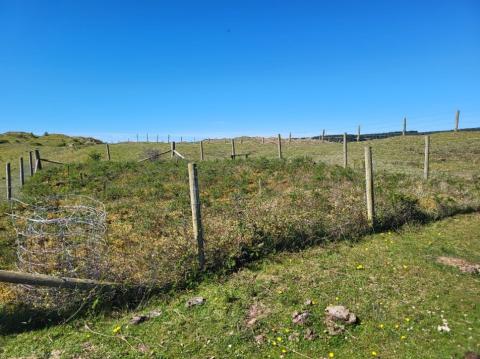
Day 2 was a field visit to Newborough dune grassland, on Anglesey (Ynys Môn), and the site of a nitrogen addition and grazing experiment – part of what was previously the UKREATE (UK Research on the Eutrophication and Acidification of Terrestrial Ecosystems) programme. At the site, we discussed project design, modifications to field work based on site specific issues (possibly some trouble caused by nosy cows), and preliminary results on recovery in the ecosystem after nitrogen addition was stopped. It was interesting to reflect on potential similarities between my findings of N sequestration in the Arctic and the pools of nitrogen in these dunes.

Image
Figure 2 CAPER day 2. Newborough field plot.

The day at Newborough was not limited to the UKREATE project, with individuals able to branch off and observe the biodiversity across the grassy dunes and hear about research that changed monitoring approaches to poultry farms. When day 2 came to an end, many of us exchanged contact information to remain in touch or, at least for me, ask many questions to help fill gaps in my research.

Image
Figure 3 CAPER day 2. Group chat on dunes about project background before heading to the plot. Photo credit Mike Perring.

Although this was my first CAPER meeting, everyone in attendance welcomed me enthusiastically, and were interested in the work displayed on my poster. I hope to attend future CAPER meetings to discuss my research progress and see the new and exciting work in global air pollution monitoring.


Acknowledgements


Thank you to the CAPER organisers, Felicity Hayes, Natalie Fenner, and Ed Rowe. Thanks to Laurence Jones for taking the group to the Newborough research site. Finally, thank you to Trent University IIES program for awarding me the QES scholarship which made it possible to attend this conference, and Mike Perring for hosting me at UKCEH Bangor for the summer.