UK Centre for Ecology & Hydrology’s (UKCEH) long-term air quality research has helped shape policies that improve public health and protect the environment, contributing to an estimated £9.5 billion in societal benefits since 2010, a new report has found.
The independent evaluation, commissioned by Natural Environment Research Council (NERC), found that air quality research delivers around £17 of social value for every £1 invested, helping improve public health, inform policy and support innovation.
Air pollution remains one of the UK's biggest environmental health risks, contributing to around 30,000 deaths annually and costing the economy up to £50 billion a year. While emissions have fallen significantly since 2010, the report concludes that NERC-funded science has played an important role in these improvements.
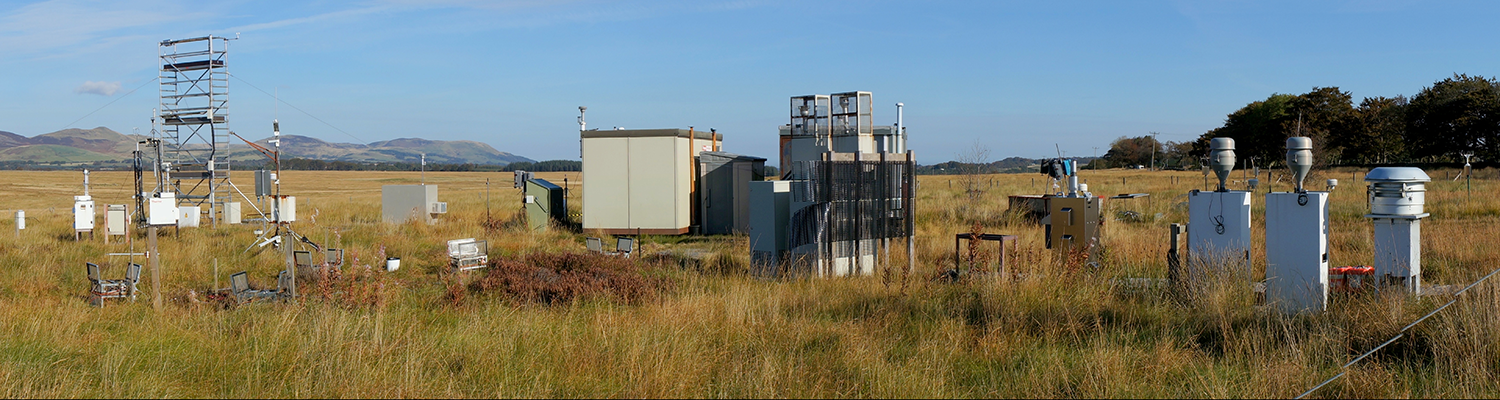
The report highlights UKCEH as one of the UK's key providers of long-term air quality research and evidence, through National Capability funding. This includes an advanced national infrastructure for air quality research including a long-term network of air pollution monitoring observatories such as Auchencorth Moss Atmospheric Observatory in Scotland and the BT Tower Atmospheric Observatory in London. Through sustained monitoring, modelling and scientific expertise, UKCEH researchers have helped governments understand how air pollution affects people and ecosystems, and how policies can be designed to reduce its impacts.
Dr Eiko Nemitz, Air quality scientist at UKCEH, said: "A lot of what we are doing with our National Capability funding is feeding into Defra's air quality strategies and PM2.5 target-setting process. We are underpinning their modelling with our model, answering questions they cannot answer themselves and simulating emission reduction scenarios in specific sectors."
Informing cleaner air policies
The report cites UKCEH's support for government air quality strategies and PM2.5 target setting, with its atmospheric models helping policymakers assess the likely impact of different interventions.
UKCEH also produces annual reports for Defra on the environmental impacts of air pollution and the effectiveness of measures to reduce emissions and protect habitats.
Protecting ecosystems at home and abroad
The evaluation highlights UKCEH's internationally recognised work on nitrogen and ammonia pollution. Over three decades, UKCEH research has helped shape international agreements to reduce ammonia emissions across Europe.
As almost half of UK PM2.5 pollution originates overseas, reductions in emissions in countries including Germany, France, Belgium and the Netherlands have delivered significant benefits for UK air quality and public health.
Tackling acid rain and future challenges
The report also recognises UKCEH's historic role in tackling sulphur pollution and acid rain. Research demonstrating the impacts of sulphur emissions on ecosystems helped inform international agreements that contributed to major reductions in air pollution.
While air quality has improved substantially, the report notes continuing challenges from agricultural ammonia emissions and non-exhaust transport pollution, such as tyre and brake wear.
UKCEH scientists continue to carry out monitoring, modelling and experimental research to further understand the effects of air pollution and work directly with government bodies to embed evidence into decision making.
Find out more