In her blog, Melissa Allan, International Relations Coordinator at UKCEH, reflects on her recent attendance at the UN Convention to Combat Desertification (UNCCD) COP17 in Mongolia and discusses what it might take for the Rio Synergies Agenda to succeed.
The blog draws lessons from UNCCD COP17 and looks ahead to UN Convention on Biological Diversity (UNCBD) COP17 and UN Framework Convention on Climate Change (UNFCCC) COP31. Alongside this you will find the first in a series of Perspectives Papers highlighting practical opportunities to strengthen implementation across the land, biodiversity and climate agendas.
This year, the international community is gathering for the three Conference of the Parties (COPs) of the Rio Conventions: UN Convention to Combat Desertification (UNCCD) COP17 in Mongolia last month, UN Convention on Biological Diversity (UNCBD) COP17 in Armenia in October, and UN Framework Convention on Climate Change (UNFCCC) COP31 in Türkiye in November. Together, these Conventions address climate change, biodiversity loss and land degradation- challenges that are increasingly recognised as deeply interconnected. This recognition has helped drive the Rio Conventions Synergies Agenda, which seeks to strengthen collaboration and action across the three conventions while respecting their different mandates.
Supporting the Rio Conventions is closely aligned with UKCEH's strategic ambition to deliver science that supports real-world environmental decision-making. The COP forums allow us to share evidence, understand emerging policy needs, build partnerships, and ensure that our research contributes to action on some of the world's most pressing environmental challenges at local, national and global scales.
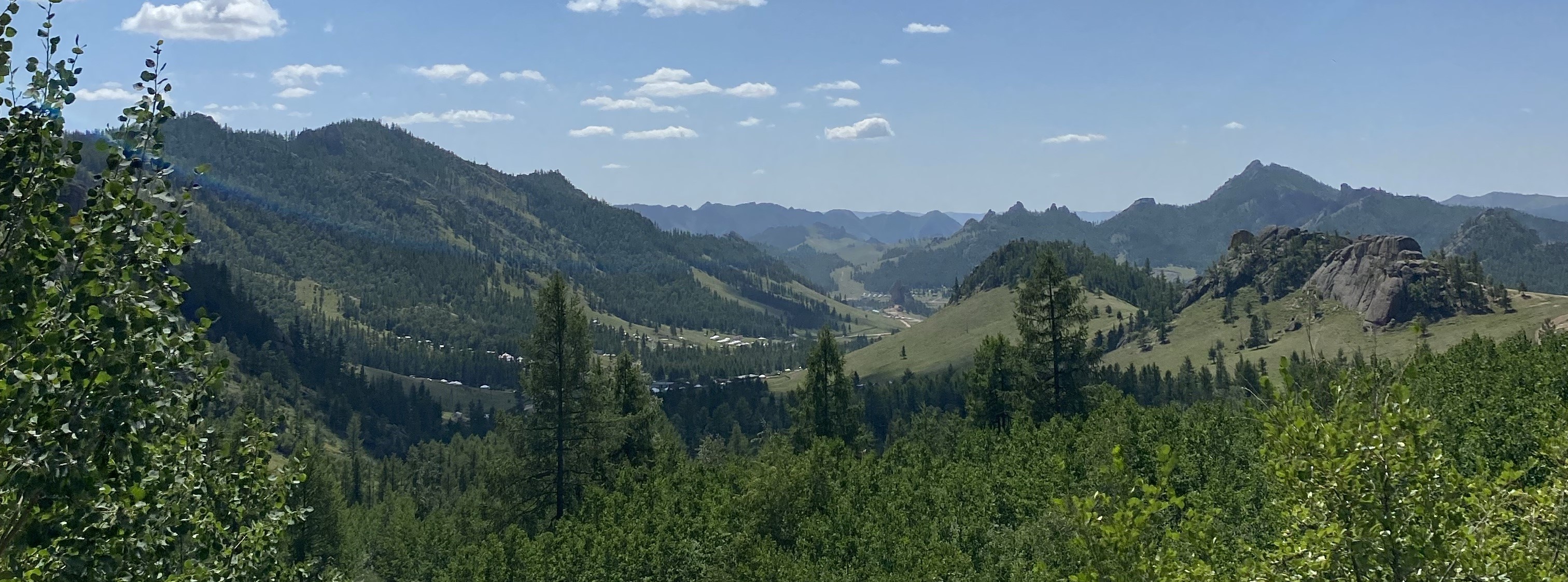
Having spent two weeks at UNCCD COP17 in Ulaanbaatar, three reflections stand out that I believe are relevant not only to the desertification agenda, but to the future of the Rio Conventions Synergies Agenda as a whole.
Reflection 1: Connected challenges need connected solutions
During discussions in Ulaanbaatar, I heard repeated accounts of the realities facing herding communities managing prolonged drought, declining pasture quality, concerns about livestock health and growing uncertainty over household incomes. While policy negotiations often focus on frameworks and targets, these conversations were a reminder that the people most affected by climate change, biodiversity loss and land degradation do not experience these challenges separately.
There are many other examples of this interconnected reality. In the tourism sector, business owners in Armenia spoke about whether the forests, rivers and landscapes that attract visitors and support local livelihoods will remain healthy and resilient. For hydropower operators in Türkiye, concerns focused on how changing rainfall patterns could affect water resources, freshwater ecosystems and energy production. Their circumstances are different. Their cultures, economies and priorities are different. But they are all navigating interconnected environmental, social and economic pressures.
Research led by UKCEH and partners is increasingly focused on helping societies navigate the choices and trade-offs that emerge when climate, biodiversity, food, water and economic objectives intersect. Work on biodiversity-informed socio-economic pathways, nature-positive futures and integrated adaptation and mitigation pathways shows that different decisions can lead to very different outcomes for resilience, prosperity and nature. Rather than treating climate, biodiversity and land as separate challenges, these approaches help identify pathways that maximise co-benefits and minimise trade-offs.
This is why a nexus approach matters. A decision taken to address one challenge can often create consequences, risks or opportunities elsewhere. Equally, a single intervention can deliver multiple benefits. Healthy soils can support agricultural productivity, biodiversity and drought resilience. Saltmarsh restoration can contribute to climate adaptation, mitigation and biodiversity recovery simultaneously.
The Rio Conventions each have a distinct role to play, and that distinction remains important. The opportunity offered by the Rio Synergies Agenda is not to make the conventions the same, but to bring together the evidence, expertise and insights needed to identify solutions that work across them.
Reflection 2: Science should help people make better decisions and improve lives
One of the most thought-provoking sessions I attended at UNCCD COP17 was the first-ever mining forum at a COP.
Listening to Indigenous representatives from the Congo Basin describe the realities of living alongside large-scale mining operations, I was struck by how different perspectives converged around the same challenge. Businesses and investors were considering how to secure the materials needed for the green transition, while communities were focused on protecting the land, water and livelihoods on which they depend.
Their message was not anti-business. It was a reminder that decisions made in corporate boardrooms and government offices have real consequences for people living closest to environmental change.
It made me think about a point recently raised by UKCEH wildfire expert, Dr. Doug Kelley after attending COP30 in Belém:
"There must be better ways we can adapt our science to meet the needs of, and maybe even empower, people living with wildfires. And not just cater to the needs of our media and perceived international negotiators."
His words echoed in the back of my mind throughout my time in Ulaanbaatar.
For me, it raised a broader question for the Rio Conventions. How do we ensure that the science underpinning climate, biodiversity and land action reaches the people who need it most, in a form they can use, at a time when they can still act on it?
This requires more than producing better datasets. It requires working with end users from the outset, understanding the decisions they need to make, and designing monitoring systems and decision-support tools around those needs. And this is important not only for frontline communities managing environmental change, but also for businesses to understand how environmental change could affect the resources they depend on, identify opportunities to reduce impacts, and adapt in ways that support both long-term sustainability and commercial resilience.
So the real question is not whether we have enough science, it is whether the science we produce is reaching the people who need it most, informing the decisions that shape their futures, and helping them respond to the interconnected challenges they face.
Reflection 3: Partnerships should build ownership, not dependence
Throughout UNCCD COP17, I found myself reflecting on a more uncomfortable question: as public budgets tighten and international development funding comes under increasing pressure, are we designing interventions that can be sustained over the long term, or are we inadvertently creating dependencies that become difficult to maintain when funding cycles end?
This is where I believe the Rio Synergies Agenda has an important role to play.
If climate change, biodiversity loss and land degradation are interconnected, then funding, planning and implementation should become more connected too. Yet too often, countries are required to navigate separate funding streams, reporting requirements and project pipelines, even when the challenges they are trying to address are occurring within the same landscapes and affecting the same communities.
The risk is not only inefficiency. It is that we spend so much time building projects that we fail to build the systems, partnerships and capabilities that enable long-term ownership and sustainability.
Week two of UNCCD COP17 kicked off with Finance Day and discussions around initiatives, such as Business for Land, reinforcing another reality: public finance alone will not be enough to address the scale of the challenge. We need greater private and blended investment. But attracting that investment requires moving beyond convention-specific silos and making it easier to see the full value of interventions that deliver benefits across climate, biodiversity and land objectives.
Most investors do not think in terms of UNCCD, UNCBD or UNFCCC mandates. They think about water security, supply-chain resilience, operational risk, growth and long-term value. The Rio Synergies Agenda offers an opportunity to make those connections visible, helping build investable portfolios that support nature, resilience, livelihoods and prosperity simultaneously.
But finance is only part of the equation. A successful Synergies Agenda requires not only more connected funding and implementation, but also partnerships that combine global expertise with local knowledge, build local capability and foster genuine ownership. The goal is not to remove external support altogether. Rather, it is to ensure that countries, communities and businesses have the confidence, capacity and agency to shape and sustain their own responses to climate change, biodiversity loss and land degradation, while continuing to benefit from international collaboration and shared expertise.
Conclusion
If there is one thing I have taken away from my time at UNCCD COP17, it is that the interconnected challenges at the heart of the Rio Conventions increasingly require integrated approaches to evidence, investment and implementation.
This is where I believe UKCEH is making, and can continue to make, a meaningful contribution.
One of our strengths is our ability to bring together different disciplines and forms of evidence to help make sense of complex environmental challenges. From environmental monitoring and forecasting to modelling and future pathways, our focus is increasingly on understanding how climate, biodiversity, land and water systems interact, and what that means for decision-making. Equally important is how we develop that science. Much of UKCEH's work is co-designed and delivered in partnership with governments, research institutions, practitioners and communities, helping to ensure that evidence is not only scientifically robust, but also relevant to local priorities, strengthens local capability and supports long-term ownership of solutions.
As discussions continue through CBD COP17 in Armenia and UNFCCC COP31 in Türkiye, I see UKCEH's role as helping decision-makers navigate those connections and the choices that come with them. People are already experiencing the interconnected impacts of climate change, biodiversity loss and land degradation every day. The question is whether our science, investments and partnerships are keeping pace with that reality.
Further reading
This blog serves as an overarching reflection on the Rio Conventions Synergies Agenda. It is accompanied by a series of UKCEH Perspective Papers published around each COP, exploring practical opportunities for strengthening implementation, resilience and investment across the climate, biodiversity and land agendas.
Available now: Strengthening Land, Soil and Drought Resilience: UKCEH Perspectives for the UN Convention to Combat Desertification, exploring how future frameworks can better integrate drought preparedness, soil health, resilience and investment targeting.
Coming soon:
UKCEH Perspectives for UNCBD
UKCEH Perspectives for UNFCCC
Find out more about UKCEH's work:
- Read about UKCEH science on nexus approaches: Lazurko, A., et al. (2026). Opportunities to integrate climate change adaptation and mitigation across 2 strategic, adaptive and transformative pathways. Preprint. IPBES. (2024). Summary for policymakers of the thematic assessment of the interlinkages among biodiversity, water, food and health (Nexus Assessment), IPBES secretariat.
- Read about UKCEH reflections from UNFCCC COP30: Thoughts from COP30: Scientists must better support fire-hit communities | UK Centre for Ecology & Hydrology
- Read about UKCEH leadership in supporting Parties to the UNCCD to mitigate, manage and adapt to droughts the UNCCD: Harnessing the latest drought science to inform a global framework | UK Centre for Ecology & Hydrology
- Read about UKCEH contributions to new report launched at UNCCD COP17: FAO and ITPS. 2026. Status of the world's soil resources 2026. Rome, FAO.
Acknowledgment:
UKCEH's participation across the Rio Conventions COPs is supported through UKRI/NERC National Capability for Global Challenges.