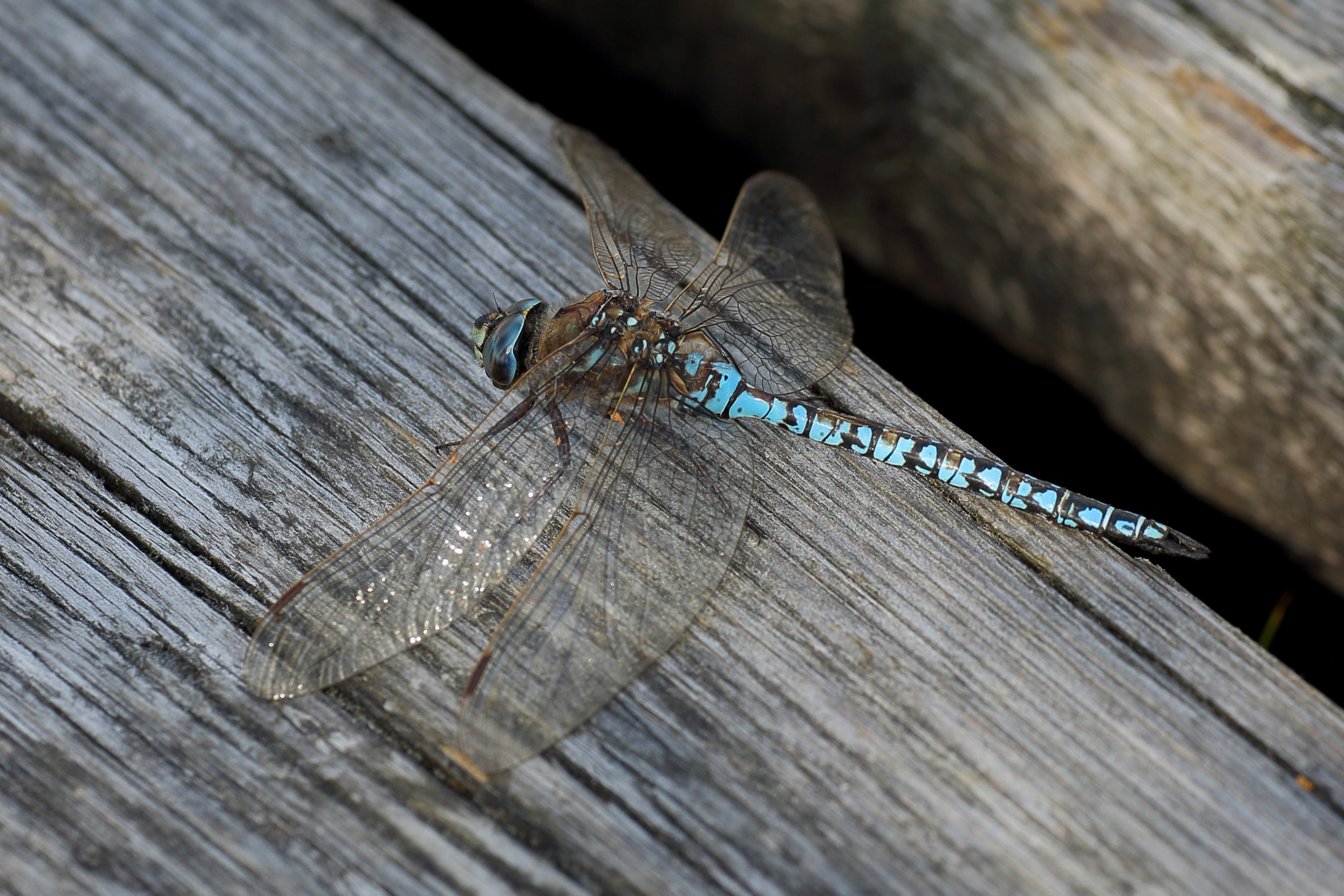
A major new assessment of Britain's dragonflies and damselflies has revealed a mixed picture, with some species expanding their range while others face increasing risk of extinction.
The British Dragonfly Society's Review of the Red List status of the Odonata of Great Britain 2026 assessed 46 established breeding species using internationally recognised criteria. The review draws on more than 1.3 million records collected over 20 years by volunteers and citizen scientists.
Scientists from the UK Centre for Ecology & Hydrology (UKCEH) provided trend analyses and risk-of-bias assessments to support the review, helping inform species threat classifications.
Dragonflies and damselflies are important indicators of the health of freshwater environments, meaning changes in their status can provide valuable insights into wider environmental change.
More species at risk
The review found that eight species are now classed as Endangered, double the number identified in the previous assessment in 2008. Species moving into the Endangered category include Brilliant Emerald, Azure Hawker, Northern Emerald and Scarce Blue-tailed Damselfly.
Other species, such as Common Hawker, have also declined, while Black Darter has been highlighted for continued monitoring because of ongoing population losses. Climate change, habitat degradation, habitat loss and fragmentation are among the pressures affecting dragonflies and damselflies across Great Britain.
Reasons for optimism
The assessment also highlights positive trends. Great Britain's dragonfly and damselfly fauna has become more diverse, with 44 established breeding species now recorded, compared to 39 in 2008.
The Dainty Damselfly, previously considered regionally extinct in Britain, has returned and successfully bred in Kent. Meanwhile, Norfolk Hawker, Variable Damselfly, Scarce Emerald Damselfly and Scarce Chaser have all improved their conservation status, reflecting successful conservation efforts and habitat management.
The findings provide an important evidence base for conservation action and demonstrate the value of long-term biological recording in understanding how wildlife is responding to environmental change.
Read the full review on the British Dragonfly Society website, along with their news story.
Significance of Red List assessments
Dr Gary Powney, UKCEH Quantitative Ecologist, said: "Understanding how species are faring is a critical part of Red List assessments, helping us identify which species are most at risk of extinction. These assessments would not have been possible without the efforts of thousands of wildlife recorders and citizen scientists, who contributed more than 1.3 million species observations on which the trends are based.
"By combining these records with state-of-the-art analytical methods, we were able to produce robust estimates of how species distributions are changing across Britain."
Dr Powney adds, “This assessment also represents a major step forward for Red Listing in Britain, where we developed a clear framework for identifying, accounting for, and documenting potential sources of bias in both the data and modelling approaches used to estimate trends. Ultimately strengthening the evidence base used to assess species status.”
Strengthening the evidence base
These Red List assessments provide one of the most important measures of biodiversity status, where they help to identify species at risk of extinction and are used to track and report on progress towards biodiversity targets in England and in turn, internationally as part of the Kunming-Montreal Global Biodiversity Framework (GBF).
UKCEH has supported assessments for plants, mammals, lichens and numerous invertebrate groups, with many more scheduled in the years ahead. UKCEH's new Red List framework is being adopted across all of our Red List work, where it is improving the transparency and reproducibility our Red List metrics, strengthening the evidence base available to support the Red Listing process.