Available translations: English

News and events

Stay Connected. Stay Informed. Shape the Future.

The NC-UK programme is bringing people together to tackle environmental challenges. Over the next five years, we’ll be hosting a calendar of events from hands-on workshops to high-impact conferences all designed to spark collaboration across science, policy, industry, and communities.

Keep visiting this page for the latest updates, opportunities to get involved, and fresh insights from across the UK’s environmental monitoring landscape

Want to stay in the loop?
If you’d like to be kept informed about upcoming in-person and online events, please subscribe to our mailing list.

Image
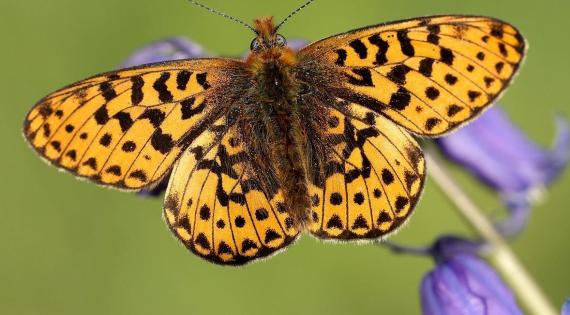
Red Admiral by Iain H Leach.

Fifty years of data reveal specialist butterflies disappearing

The world’s biggest insect monitoring scheme is marking 50 years of butterfly data collection, with over 44 million records received from 782,000 volunteers during this time. 

The UK Butterfly Monitoring Scheme (UKBMS) is jointly run by Butterfly Conservation, the UK Centre for Ecology & Hydrology (UKCEH), British Trust for Ornithology (BTO) and the Joint Nature Conservation Committee (JNCC). 

The data have revealed that species – particularly those relying on specialist habitats – are disappearing from parts of the UK. This is due to habitat loss, pollution and climate change. 

Photo: Red Admiral by Iain H Leach.

Image
Water

WEBINAR - Exploring the UK’s hydrological data archives and tools

The Surface and Groundwater Archives (SAGA) Committee announced a two-part webinar series  designed to showcase the UK’s most important hydrological data archives, monitoring programmes, and forecasting tools. Together, these sessions will offer valuable insight into the data systems that underpin research, water resource management, and environmental decision‑making across the country.

Hydrological information plays a critical role in understanding how the UK’s rivers, aquifers, and catchments respond to long‑term pressures and extreme events. This webinar series will guide participants through the major national resources that support this work, from long-term archives to real‑time monitoring platforms and seasonal outlooks.

The webinar series is open to a wide audience, including UK Measuring Authority staff, researchers, water resource managers, policy makers, and anyone interested in hydrological data and forecasting.

Webinar 2: UK Hydrological Monitoring and Outlook Tools
Date: 23 April 2026
Time: 12:30 – 13:30


Image
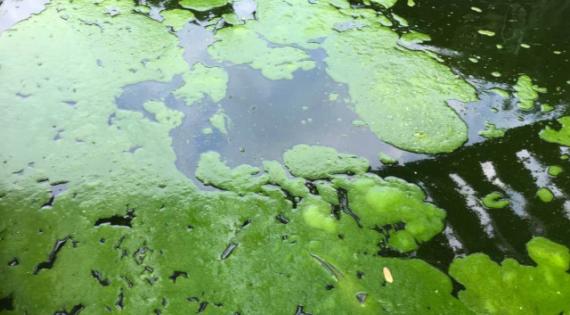
Bright green lumps of algae in dark water

Bloomin' Algae app and how to help.

Blue‑green algae, also known as cyanobacteria, naturally occur in lakes, rivers, canals and reservoirs. During warm summer months they can multiply rapidly, forming blooms and surface scums that may release toxins harmful to people, pets and wildlife.

Bloomin’ Algae is a simple citizen science app that lets you report suspected blue‑green algae when you spot it. Your reports help speed up public health warnings, support monitoring efforts, and protect communities. The app also helps you learn how to recognise algal blooms and understand the risks they pose to children, animals and anyone using the water.
Counting the Earth Podcast -Understanding Drought and Weather Extremes

The latest episode on UKCEH podcast Counting the Earth session on whiplash weather explored the increasing variability of UK weather.  UKCEH Senior Hydrologist Lucy Barker discussed recent hydrological conditions and the wider implications of the UK’s shifting climate. Although the latest Hydrological Summary indicated that January had been significantly wetter than average, the session examined whether this was sufficient to restore water reserves following the prolonged drought experienced in 2025.

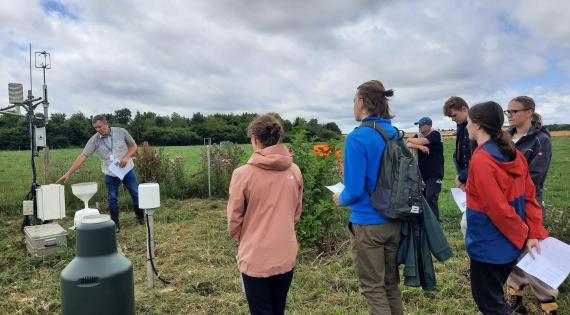
The episode also included a visit to the COSMOS‑UK field site at Chimney Meadows Nature Reserve in Oxfordshire, where UKCEH micro‑meteorologist Dr Jon Evans provided insights into the national soil‑moisture monitoring network. Chimney Meadows is one of 39 sites contributing data on soil moisture, rainfall, river flows, and groundwater levels. These datasets, gathered by UKCEH and its partners, underpin the monthly hydrological summaries, an essential resource for environmental regulators, government agencies, water companies, researchers, and the farming community.

Image
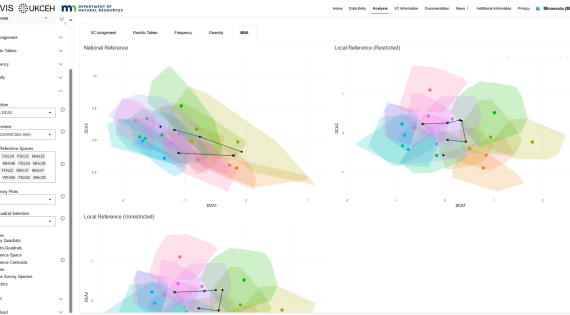
The MVA module of RMAVIS showing plots from the MNNPC St. Croix State Forest example dataset.

New International Collaboration Extends RMAVIS with Minnesota’s Native

We’re pleased to share that the R Modular Analysis of Vegetation Information System (RMAVIS) has now been fully integrated with the Minnesota Native Plant Community Classification (MNNPC), delivered in collaboration with the Minnesota Department of Natural Resources (DNR).

Part funded by NC UK this work strengthens international ties and demonstrates the impact of shared tools and expertise across borders. The MNNPC is widely used by multiple DNR divisions and across federal agencies including the U.S. Forest Service, Natural Resources Conservation Service, National Park Service, and U.S. Fish and Wildlife Service, as well as county land departments, NGOs, educators, researchers, and environmental consultants.

Through this integration, RMAVIS becomes one of the primary ways to access the MNNPC, while also adding new analytical capabilities that were not previously available. Users can now match vegetation plots to the MNNPC, calculate diversity metrics, run multivariate analyses, and generate floristic tables — all within a single, accessible platform.

This collaboration is a great example of how NC UK supported work can deliver meaningful international impact while strengthening tools used by the ecological and conservation community worldwide.

Amy Kendig and Alaina Berger’s time was funded by the Minnesota Environment and Natural Resources Trust Fund, as recommended by the Legislative‑Citizen Commission on Minnesota Resources (LCCMR).

Image
Microplastics concentrated onto a filter for analysis by infrared spectroscopy

Improving Confidence in Microplastics Research

Concerns have recently been raised about the reliability of several high‑profile studies reporting microplastics in the human body. In response, a UKCEH research team has proposed a clear and practical approach for communicating certainty levels in scientific findings. Their work aims to strengthen trust, improve transparency, and support more informed interpretation of microplastics research.

Read the full article to explore the team’s recommendations and why they matter for science, policy, and public confidence.

Image
Biological Records Centre logo

Biological Records Centre (BRC) updates

BRC has contributed distribution maps to a newly published field guide, Field Guide to the Grasshoppers and Allies of Great Britain and Ireland by Peter Sutton (Bloomsbury Wildlife Guides). The guide covers grasshoppers, crickets, earwigs, cockroaches, mantids and stick‑insects, providing updated information on species distributions and supporting both expert and enthusiast identification.

To help shape future improvements in species data availability and usability, BRC is inviting all users of UK species occurrence records to complete a short survey. By sharing their experiences, data users can directly influence BRC’s future work on data mobilisation and the development of new biodiversity data products.

Image
NEMC 2025

National Environmental Monitoring Conference 2025

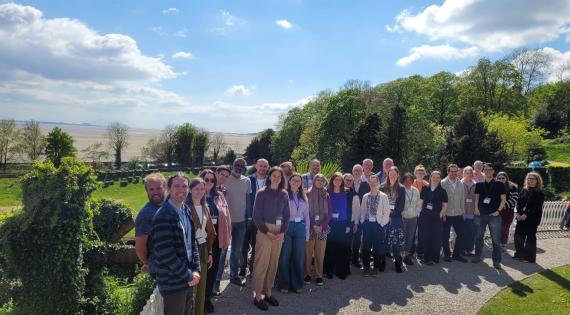
The National Environmental Monitoring Conference (NEMC) brought together around 180 participants from across the UK to strengthen coordination within the national monitoring community. A key focus was on investing in the people, tools, and systems needed to turn environmental data into meaningful action.

Early Career Researchers were also strongly supported, with steering committee representation, dedicated funding and active roles in sessions and discussions.
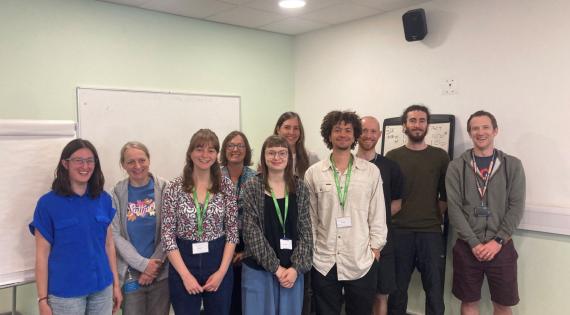
Meet some of our early careers attendees here .

This event was organised by the British Ecological Society (BES), UK Centre for Ecology & Hydrology, and the UK Environmental Observation Framework (UKEOF).

Image
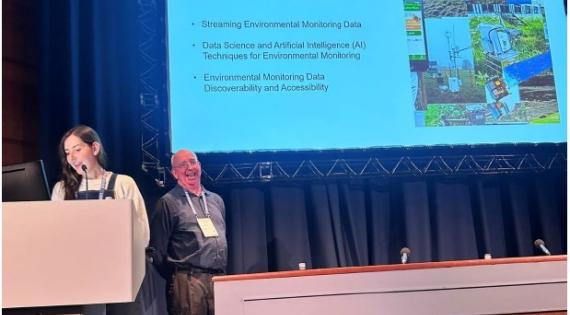
Dri Kelly Widdicks standing at podium presenting with Prof Gordon Blair in from of a screen with presentation on

Digital Research Infrastructure (DRI) at the NEMC 2025

Environmental monitoring is rapidly shifting toward digital, automated, and AI‑enabled approaches that improve how data is captured, processed, discovered, and shared. These advances form a growing Digital Research Infrastructure (DRI) that supports faster insights and more integrated environmental science.

At National Environmental Monitoring Conference (NEMC) 2025, UKCEH highlighted its latest DRI work across major National Capability programmes, focusing on three areas: streaming monitoring data, applying data science and AI, and improving data discoverability and access. Attendees contributed ideas throughout the session, helping shape future directions in digital environmental monitoring.

Find out more by clicking on the report below.

Image
The Evolution and Integration of Monitoring Networks for Quantifying Hydrological Variability - A Foundation for Fostering Resilience to Climate Change

NEMC2025: The Evolution and Integration of Monitoring networks

A multi-organisation talk at NEMC: The Evolution and Integration of Monitoring Networks for Quantifying Hydrological Variability - A Foundation for Fostering Resilience to Climate Change

Monitoring of the water cycle from the sky to the ground is essential for understanding the processes generating floods and droughts, for investigating the impacts of climate change, and for managing local human influences.  Rainfall, river flows, soil moisture and groundwater level are all monitored with the aim of providing the long datasets, high data quality and national coverage that are needed to underpin scientific research and operational decisions, alike.  A Network Appraisal workshop was held in March 2025 that aimed to share best practice and foster integration in monitoring across the water cycle, with 15 organisations represented.  

A collaborative talk at the National Environmental Monitoring Conference in Edinburgh in December 2025 followed the workshop, with contributions from Karl Shepherdson of the Met Office, Jon Evans of COSMOS-UK at UKCEH, Catherine Sefton of the National River Flow Archive at UKCEH, and Chelsea Bambrick of the National Groundwater Level Archive at the British Geological Survey. 

Image
UK Graphic Map

Building a vision for an Integrated Environmental Monitoring Network

UKCEH is strengthening environmental monitoring with smarter, joined-up observation of land, freshwater, and air across the UK. Using advanced sensors, AI, and adaptive sampling, we aim to support science, policy, and industry.

We’re working with the community to make environmental data more accessible and useful - helping researchers, policymakers, businesses and practitioners respond to today’s challenges.

Underpinned by our Digital Research Infrastructure and our vision for an Integrated Environmental Monitoring Network, our work will bring together science and technology to better understand the UK environment.

Help Shape the Future of Environmental Monitoring and take our short survey to share your views:

•    What data or tools would be most helpful to you?
•    How can access to environmental data be improved?
•    What do you see as the main benefits of an integrated monitoring network?
•    What are the main challenges you face in relation to environmental data?

Image
Data for Nature for Nature Image

Data from Nature, for Nature

At UKCEH, we look after environmental data so it can keep working hard for everyone who needs it. Our science infrastructures and long-term monitoring programmes under National Capability for UK Challenges, and resulting data, tools and models enable researchers across the UK to understand and predict environmental processes and change.

We are committed to managing these datasets for the long term, so they can easily be accessed by all and used to inform environmental research, policy, innovation and conservation efforts around the world.

Image
UKCEH Environmental Science toolbox image

Enhancing Discoverability & Access to Environmental Exposure Data

A Community Conversation about Enhancing Discoverability & Access to Environmental Exposure Data and Methods 

Our most recent National Capability engagement activity in December 2025 highlighted progress on developing a UK Environmental Exposure hub (EEX), a shared resource designed to bring together pollution data with wider environmental, ecological and socio‑economic information to better understand risk to people and ecosystems. Integrating this wide range of dynamic data presents major challenges, including inconsistent formats, scales, standards, quality and access restrictions, as well as technical barriers around interoperability and storage. Rather than each project managing its own data in isolation, the EEX is taking a collaborative approach with the UKCEH Digital Research group and the wider science community to co‑create reusable tools and methods that connect to data at source, support real‑time analysis and reduce duplication. Community Conversations have been used to gather insight, most recently focusing on discovery and access to exposure data and methods, and the project is now in its second year, with a report from this work to be shared soon.

Reports from previous Community Conversations include the Spatial Data Explorer and the Data Science Toolbox

Image
UK-BON Image

Towards a UK Biodiversity Observation Network

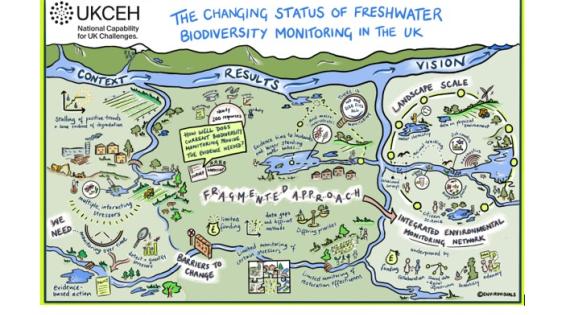
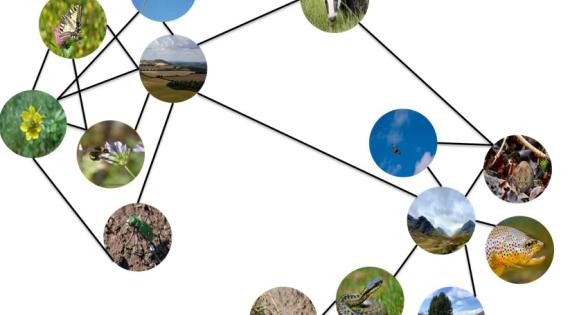
The UK biodiversity monitoring landscape is fragmented: there are many schemes operating in isolation from one another, creating the potential for redundancy and duplication. There is also a disconnect between data providers, end-users and stakeholders. Although the UK is currently the best-monitored nation on earth, our monitoring networks are the result of haphazard evolution. Many nations that lack the UK's historical advantages have begun designing monitoring systems with integration at the core. Moreover, the emergence of new technologies is allowing other nations to build monitoring networks rapidly and catch up. If the UK does not act swiftly, we risk losing our position as the best monitored nation on earth. 

To address this, we need a more integrated approach to biodiversity monitoring. The Group on Earth Observations Biodiversity Observation Network (GEO BON) is a blueprint for integrated monitoring and reporting of biodiversity data across the world and is underpinned by national Biodiversity Observation Networks (BONs). 
We want to create a UK BON, a community of practice to: 
1) bring together users and providers of biodiversity monitoring data, 
2) coordinate biodiversity monitoring to support policy and conservation action and 
3) produce and share knowledge about best practices in biodiversity monitoring.  

If you want to learn more or would like to get involved please get in touch with Francesca Mancini at framan@ceh.ac.uk

Image
A map of Downham Market area from the 1960s maps.

Maps created by 1960s schoolchildren provide new insights

A new study of 1960s maps, many of which were created by young people, has provided important fresh evidence of the timing and extent of habitat losses caused by agricultural intensification and urban growth in England and Wales. 

Image
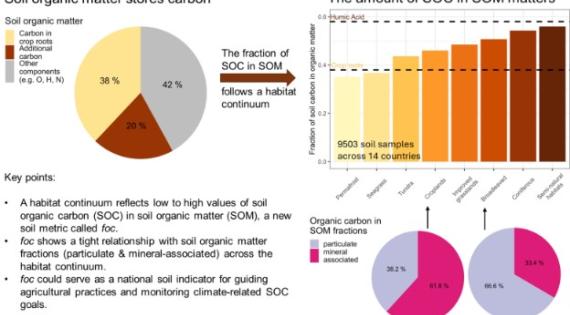
Graphical abstract_Soil organic

A novel indicator to understand soils’ potential to store carbon

Soils are one of the planet’s largest carbon stores, playing a vital role in tackling climate change. But not all soils store carbon in the same way. This research looked at nearly 10,000 soil samples from Europe and beyond to understand how carbon is held in soil organic matter across different habitats—from croplands and woodlands to grasslands and even seagrass beds. 

NC-UK discovered a strong link between soils and vegetation, and the way carbon is stored. By identifying a simple indicator—the fraction of carbon in soil organic matter—we can predict how much carbon soils can hold and how stable it is. This matters because carbon locked in soils helps regulated greenhouse gas emissions to the atmosphere. 

Healthy soils don’t just grow food—they store carbon, protect biodiversity, and make landscapes more resilient. Understanding soil carbon is a big step toward smarter land use and stronger climate action. 

The datasets: https://zenodo.org/records/17305831 and https://catalogue.ceh.ac.uk/documents/29cd5386-bc2e-4d70-a6a5-0d7dc7513dc6  

The blog post: https://ai4soilhealth.eu/providing-a-novel-indicator-to-understand-soils-potential-to-mitigate-climate-change/  

Image
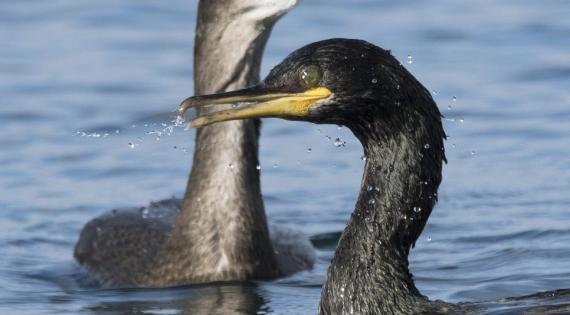
European Shags. Photo Credit Gary Howells

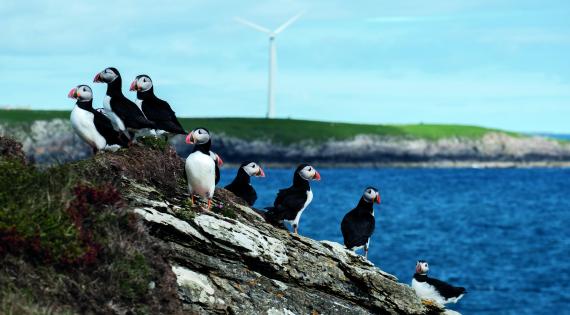
Wild seabirds more likely to split in windy weather
A new study led by Edinburgh Napier University, with UKCEH and BioSS, shows that wild seabirds are more likely to ‘divorce’ and change partners in windier pre-breeding seasons. Analysing 20 years of data on European shags from the Isle of May, researchers found that wind speed had the strongest influence on mate faithfulness, with birds that stayed together tending to breed earlier and more successfully. The findings highlight how climate change could disrupt social behaviours in wildlife.


Seabird breeding success varies across oceans
Separate research involving UKCEH and led by the Farallon Institute reveals that seabird breeding success is declining in the Arctic, Northern European Seas and Northwest Atlantic, but remains more stable in the Pacific and Hawaiian regions. The study, which includes 30 years of UKCEH data on six seabird species, is supported by an interactive tool exploring global seabird-climate dynamics.
 

Image
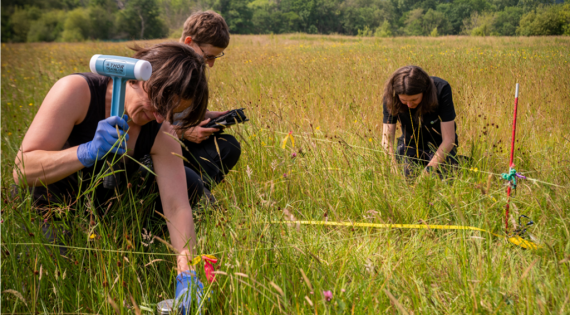
Countryside Survey surveyors in the field

Soil carbon recovery in British croplands

New findings from the UKCEH Countryside Survey reveal the first national-scale evidence of recovering soil organic carbon in British croplands, reversing decades of decline. After losing around 11% of topsoil carbon between 1978 and 2007, cropland soils have shown significant recovery from 2007 to 2020.

This turnaround is linked to shifts in land management practices, such as reduced tillage and straw removal, and marks a hopeful step toward restoring soil health and resilience at scale 2.

Read more via the British Society of Soil Science or access the full study in the European Journal of Soil Science.

Image
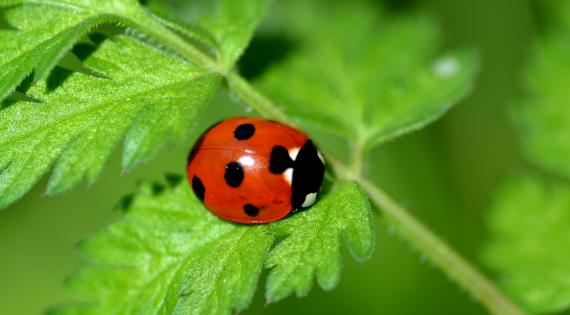
Ladybird

UKCEH database unlocks the secrets of ladybirds

The UK Centre for Ecology & Hydrology supported by NC-UK has just launched a comprehensive Ladybird Traits Database, offering an exciting new resource for researchers, conservationists, and citizen scientists across the UK.
Thanks to this publication, detailed trait data for all known UK species is available in one place covering aspects such as diet, habitat, lifecycle, colour patterns, and ecological roles.

The database supports efforts to improve understanding on species distributions, monitor biodiversity changes, and assess the impacts of climate change and invasive species. It also helps inform conservation strategies and policy decisions by providing accessible, structured data for over 40 native and non-native species.

Dr Helen Roy, a leading entomologist at UKCEH, said:
"Ladybirds are not just beautiful beetles—like all insects they provide essential ecosystem functions including controlling pest insects. This database brings together decades of research and recording effort to help us track how these species are responding to environmental pressures."

The Ladybird Traits Database is part of UKCEH’s broader commitment to open science and biodiversity monitoring. It complements existing resources like the UK Ladybird Survey and supports data sharing through platforms like the NBN Atlas and iRecord.

Researchers, educators, and wildlife enthusiasts are encouraged to explore the database and contribute to ongoing monitoring efforts.

Image
The River Thames graphic

UKCEH strengthens international links through DANUBIUS ERIC

UKCEH has been working to integrate the Thames Initiative into a major European research infrastructure since 2016. This long‑term effort has now developed into the DANUBIUS European Research Infrastructure Consortium (ERIC) — an ambitious programme designed to bring together world‑leading river, estuarine, and coastal research across Europe.

DANUBIUS ERIC connects research platforms located along major European river systems, including the upper, middle and lower Danube, the Rhine, Ebro, Po and the Venice Lagoon, and the River Forth in Scotland (as part of DANUBIUS‑IP). Together, these sites form an integrated network for scientists to study the pressures, processes, and management of river–sea systems at a continental scale.

UKCEH’s contribution to this international collaboration is delivered through the Thames Initiative and FDRI. These platforms will collectively form the Thames Supersite within DANUBIUS ERIC, creating new opportunities for shared learning, innovation, and scientific exchange. As part of the Supersite, UKCEH will:

  • Share data, facilities, and expertise with partners across Europe
  • Host visiting international researchers who wish to conduct studies using the Thames monitoring platforms
  • Contribute long‑term environmental data that supports cross‑European comparisons
  • Apply Thames‑based models and knowledge to other major European catchments

This collaboration brings a significant new dimension to NC‑UK and UKCEH research, allowing UK scientists to work more closely with European partners while opening up the potential for larger, more impactful international projects. By linking the Thames to major river–sea systems across Europe, UKCEH is helping to build a deeper understanding of freshwater and estuarine environments and supporting the development of sustainable solutions to environmental challenges that are shared across borders. 

Image
IMLOTS

Ecosystems mediate climate impacts on northern hemisphere seabirds

With the world’s oceans under increasing pressure from climate change and other human impacts, understanding ecosystem resilience is vital. Seabirds are excellent indicators of marine ecosystem health. Protecting the diverse food webs that support seabirds is critical for preserving marine biodiversity and society that depends on healthy marine ecosystems for food, inspiration, and cultural well-being. However, many seabird populations have shown declines in recent decades in association with warming sea temperatures. UKCEH’s long term study of seabirds on the Isle of May, supported by NERC National Capability funding, contributed to a meta-analysis of climate change impacts on seabird breeding success across the Northern Hemisphere, published in Nature Communications Earth and Environment. The team analysed 138 long-term datasets spanning over five decades across seven marine ecosystems. The study revealed chronic declines in productivity in the region where the Isle of May is located (Northern European Seas), as well as in the Arctic and Northwest Atlantic. In contrast, populations in the Northeast Pacific, Northwest Pacific and Hawaiian regions were more stable. Regions with more diverse prey in the diet were buffered from ocean warming, reflecting a “portfolio effect” that promotes higher productivity under changing conditions. However, species in other regions including Northern European Seas had lower diet diversity and are potentially less resilient to environmental change. These findings emphasise the importance of ecosystem processes and structure in determining the vulnerability of marine predators to climate change. The paper shows the power of large-scale data sharing and is complemented by an interactive web platform allowing users to explore the patterns in seabird productivity.

The study is part of the UN Decade of Ocean Science Global Integration of Seabird Time Series project (https://oceandecade.org/actions/global-integration-of-seabird-time-series/). 

Image
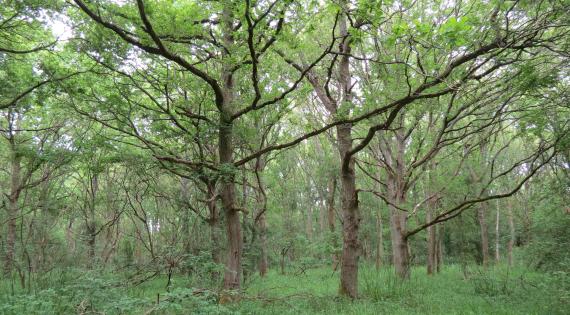
Woodland after 59 years

Help co-design a Restoration Hub

UKCEH aims to co-produce, with the nature recovery practice community, a free to use data and knowledge hub.  The platform will meet the needs and requirements of different stakeholders through activities such as digitising and mapping restoration and rewilding activities and providing data on what is being monitored; species, habitats of interest, extent, wellbeing etc. 

Image
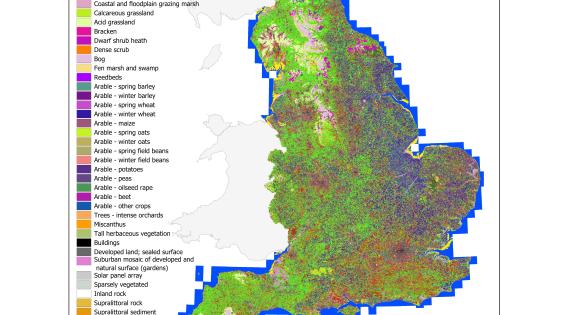
Land Cover Map 2024

Explore how land cover varies between different parts of the UK

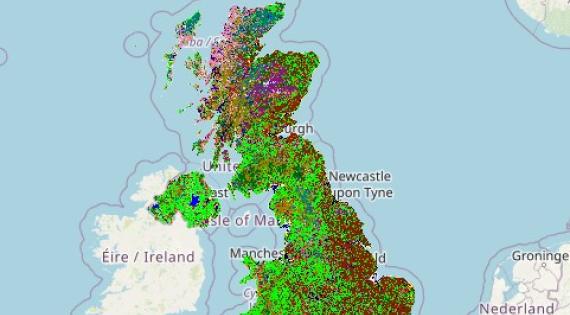
The latest UKCEH Land Cover Map now includes easy-to-access statistics showing how habitats vary across UK counties and nations. Using high-resolution satellite data, the map reveals the distribution of broad habitats—from woodland to urban areas—down to 10-metre detail.

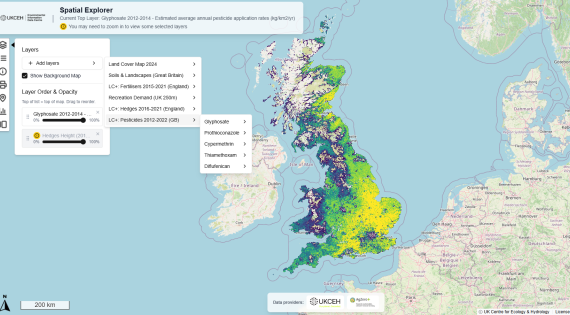
For the first time, users can view land cover statistics without specialist software, making insights more accessible for policymakers, NGOs, water companies and land managers. The data is available in hectares and percentages, and can be explored interactively via our new spatial explorer tool.

Maps and data are free for academic and non-commercial use via the Environmental Information Data Centre (EIDC).

The development of the new dataset and the spatial explorer tool was funded by the Natural Environment Research Council through the National Capability for UK challenges (NC-UK) programme.