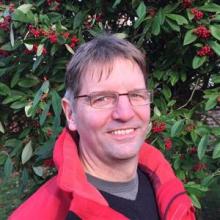
Dr Claus Svendsen

Dr Claus Svendsen

Ecotoxicologist

Centre for Ecology & Hydrology
Maclean Building
Benson Lane
Crowmarsh Gifford
Wallingford
Oxfordshire
OX10 8BB
T: +44 (0)1491 838800
F: +44 (0)1491 692424
E-mail: Dr Claus Svendsen
 

Research interests

My particular interest is how organisms survive as populations in polluted habitats. As part of our research into the systems organisms use to handle pollution, we aim to develop understanding that allows us to identify polluted soil areas and accurately assess the ecological risk at such sites.

Assessing risk to biota from pollution becomes particularly complex when trying to take the dynamic nature of real environments into account: achieving the best possible tools for this is what drives the research I do.

Since arriving at CEH, in 1994, my research has centred on issues relating to soil pollution and focuses on:

  • Biomarkers: Identification and validation of biomarkers for assessing early biological effects of pollution.
  • Mixtures: Developing ways of addressing how effects from pollutant mixtures can be addressed in detail, and how this will affect the risk they pose to biota. Mixture Toxicity Analysis Tools.
  • Ecological Risk Assessment: The development and testing of biological assays for measuring the effects of soil contamination on biota.
  • Environmental Genomics: Understanding how the effects of contaminants at the molecular level translate to effects on the whole individual and the consequences of these effects at the population level throughout project ECOWORM. See also this recent news item.
  • Comparative Genomics: Using genomic technology to address all of the above, both in the model organism C. elegans (nematode worm) and the environmental sentinel L.rubellus (earthworm).

The results from my research enables us to collaborate with environmental regulators to deliver better understanding, and to develop tools for sound risk assessment and management, and to guide them in formulating effective policies to protect environmental health.

Brief CV

2002 onwards: Within an Ecological Chemistry and Biochemistry Group, working primarily on the NERC Environmental Genomics project ECOWORM, identifying specific and conserved gene expression responses to pollutant exposure and linking these to ecological consequences, using demographic population modeling, Q-PCR and microarray techniques, but also on developing ecologically relevant and site specific Critical limits for metals in soil for DEFRA.

1999–2002: Pollution and Ecotoxicology, CEH at Monks Wood (Soil and Invertebrate Ecotoxicology Group). Working on biomarkers, mixture toxicity, and validating tools for ecological risk assessment.

1996–1999: PhD “Earthworm Biomarkers in Terrestrial Ecosystems”, University of Reading, undertaken at ITE, Monks Wood, on an award from the Danish Research Academy.

1995–1996: Casual Scientific Officer, Pollution and Ecotoxicology, working on developing a biological monitoring Decision Support System.

1992–1995: MSc in Ecotoxicology, Odense University, Denmark. With 12 months' overseas funding from The Royal Danish Academy of Sciences and Letters to undertake the thesis project “Development of an in vitro neutral-red retention assay for testing toxicant induced cell damage in soil invertebrates: Field extrapolation and validation” at ITE, Monks Wood, UK.

1989–1992: BSc in Biology and Chemistry, Odense University, Denmark. With three months' ERASMUS funding to undertake the thesis project, “The effect of cadmium on the interspecific interaction between Chironimus riparius and Chydorus piger”, at the Department of Pure and Applied Aquatic Ecotoxicology, University of Amsterdam, The Netherlands.

Selected publications

See also the NERC Open Research Archive.

2005 and earlier

Lofts, S., Spurgeon, D.J. and Svendsen, C. (2005) Fractions affected and probabilistic risk assessment of Cu, Zn, Cd and Pb in soils, using a free ion approach. Environmental Science and Technology (in press).

Jonker, M.J., Svendsen, C., Bedaux, J.J.M., Bongers, M. and Kammenga, J.E. (2005) Significance testing of synergistic/antagonistic, dose level–dependent, or dose ratio–dependent effects in mixture dose–response analysis. Environmental Toxicology and Chemistry, 24, 2701-2713.

Spurgeon, D.J., Svendsen, C., Lister, L.J., Hankard, P.K. and Kille, P. (2005) Earthworm responses to Cd and Cu under fluctuating environmental conditions: a comparison with results from laboratory exposures. Environmental Pollution 136 (3), 443-452.

Spurgeon, D.J., Ricketts, H., Svendsen, C., Morgan, A. J. and Kille, P. (2005). Hierarchical responses of soil invertebrates (earthworms) to toxic metal stress. Environmental Science and Technology 39 (14), 5327-5334.

Svendsen, C., Spurgeon, D.J., Hankard, P.K. and Weeks, J.M. (2004) Lysosomal membrane stability measured by neutral red retention - is it a workable earthworm biomarker? Ecotoxicology and Environmental Safety 57, 20-29.

Spurgeon, D.J., Sturzenbaum, S.R., Svendsen, C., Hankard, P.K., Morgan, A.J., Weeks, J.M. and Kille, P. (2004) Toxicological, cellular and gene expression responses in earthworms exposed to copper and cadmium. Comparative Biochemistry and Physiology Part C: Toxicology & Pharmacology, 138, 11–21.

Lofts, S., Spurgeon, D.J., Svendsen, C. and Tipping, E. (2004) Deriving soil critical limits for Cu, Zn, Cd and Pb: A method based on free ion concentrations. Environmental Science and Technology, 38, 3623–3631.

Spurgeon, D.J., Svendsen C., Weeks, J.M., Hankard, P.K. Stubberud, H.E. and Kammenga, J.E. (2003) Quantifying copper and cadmium impacts on intrinsic rate of population increase in the long-lived terrestrial oligochaete Lumbricus rubellus. Environmental Toxicology and Chemistry, 22, 1465-1472.

Colgan, A., Hankard, P.K., Spurgeon, D.J., Svendsen, C., Wadsworth, R.A. and Weeks, J.M. (2003) Closing the loop: linking observed environmental damage to heavy metal emissions. Environmental Toxicology and Chemistry, 22, 970-976.

Kammenga, J.E., Spurgeon, D.J., Svendsen, C. and Weeks, J.M. (2003) Explaining density dependent regulation in earthworms. Oikos 100, 89-95.

Robidoux, P.Y., Svendsen, C., Sarrazin, M., Hawari, J., Thiboutot, S., Ampleman, G., Weeks, J.M. and Sunahara, G.I. (2002) Evaluation of tissue and cellular biomarkers to assess 2,4,6-trinitrotoluene (TNT) exposure in earthworms – effect-based assessment in laboratory studies using Eisenia andrei. Biomarkers, 7 (4), 306-321

Bundy, J.G., Spurgeon, D.J., Svendsen, C., Hankard, P.K., Osborn, D., Lindon, J.C. and Nicholson, J.K. (2002) Earthworm species of the genus Eisenia can be phenotypically differentiated by metabolic profiling. FEBS letters 521 (1-3), 115-120.