Available translations: English

13.11.2025

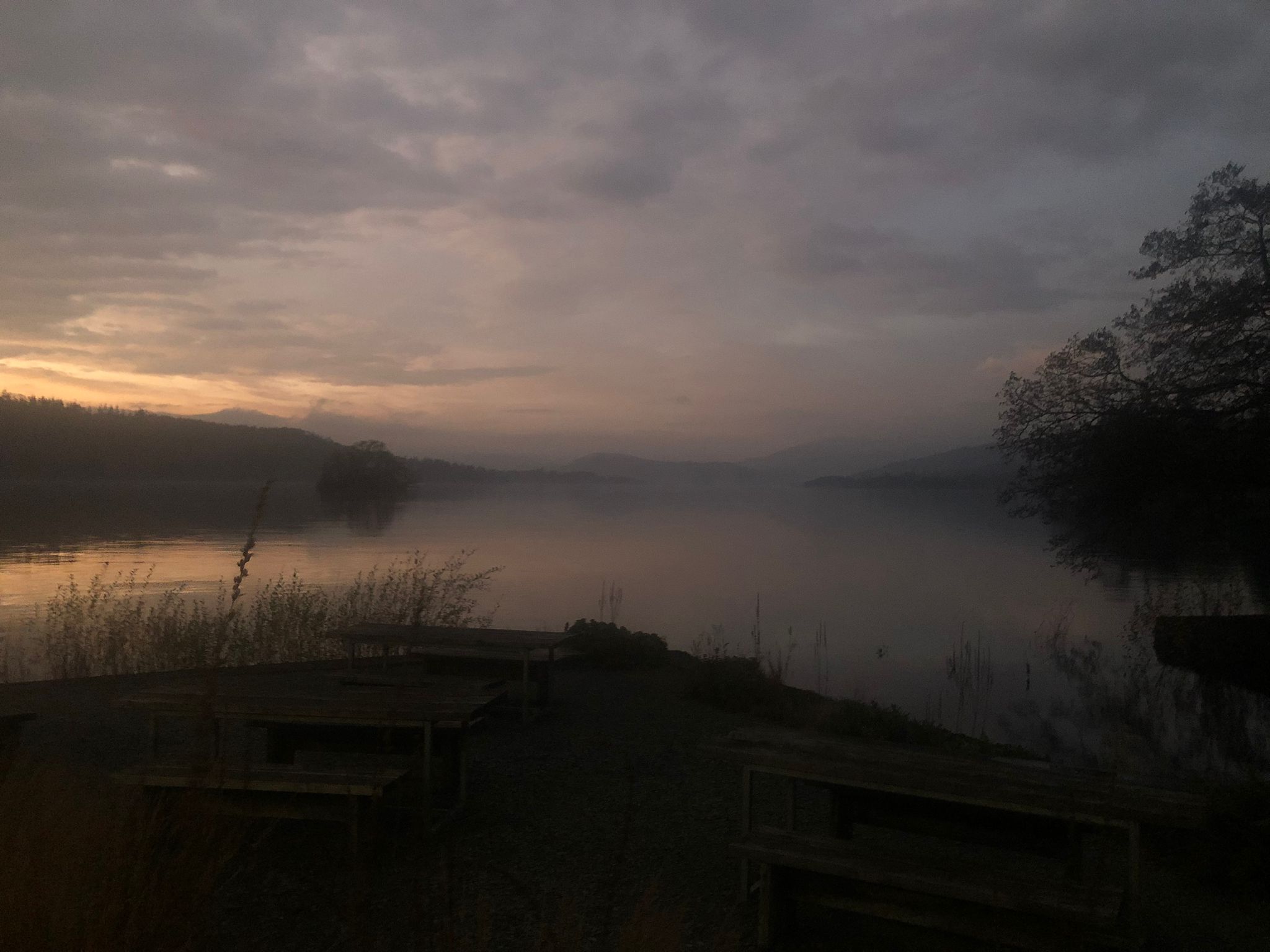
UKCEH hosted the 10th Cumbrian Lakes Research Forum on the shores of Windermere early this November. The week’s heavy rain and localised flooding didn’t dampen the celebration of 80 years of long-term lake monitoring in the Cumbrian lakes.

The day recognised the value of historical data and looked to the future, with UKCEH scientists detailing the innovative, novel approaches which are helping to develop our ecosystem understanding, to support lake managers in focusing restoration efforts and tackling the challenges which these unique ecosystems continue to face. Freshwater ecologist Heather Moorhouse describes proceedings...

This year, the Cumbrian lakes celebrated two historic milestones. Firstly, we marked 80 years of long-term monitoring, established by the Freshwater Biological Association, and now undertaken by scientists at UKCEH. This remains one of the longest lake monitoring schemes in the world. The second milestone was 10 years of the Cumbrian Lakes Research Forum, an initiative founded by UKCEH freshwater scientists Ellie Mackay and Steve Thackeray in 2015. This annual event brings together researchers and practitioners to share knowledge and learnings on lakes and freshwater management.

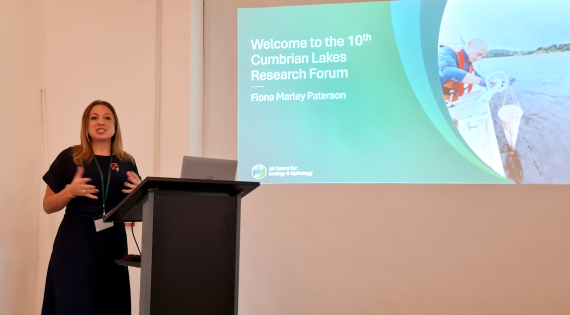
This year's anniversary event was opened by ITV Border’s Fiona Marley Paterson, who set the scene by describing the narratives and stories which surround Windermere at the moment, and the need for scientific and evidence-driven input into these debates.

A series of presentations followed. Steve Thackeray, Head of the Aquatic Ecosystems group at UKCEH, showcased the value and achievements of the 80-year Cumbrian lake long-term monitoring programme and the future innovations and opportunities the programme has stimulated.

Specifically, he outlined how the consistency of data collection using established methods (collected every fortnight) provides opportunities to develop and test new techniques, with novel approaches helping to adapt and innovate the programme and its research potential.

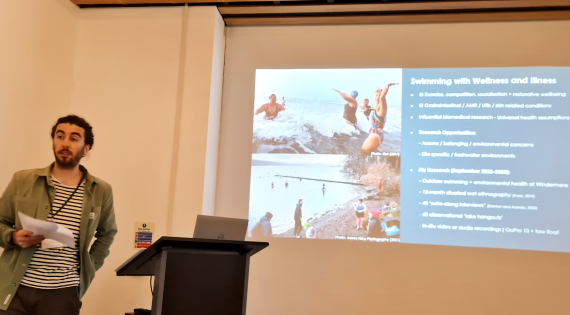
It was great to have Taylor Butler-Eldridge from the University of Exeter back at the Forum, having first presented at the start of his PhD a few years ago. He shared findings from his research on the socio-cultural relationships between outdoor swimming and environmental health at Windermere. Taylor's reflections noted the tension between swimming narratives of ill-health and wellbeing, and how swimmers relate these to environmental conditions.
Image
Fiona Marley Patterson stands at the lectern to open the 10th Cumbrian Lakes Research Forum

Fiona Marley Paterson, ITV Border, opens the 10th Cumbrian Lakes Research Forum

Image
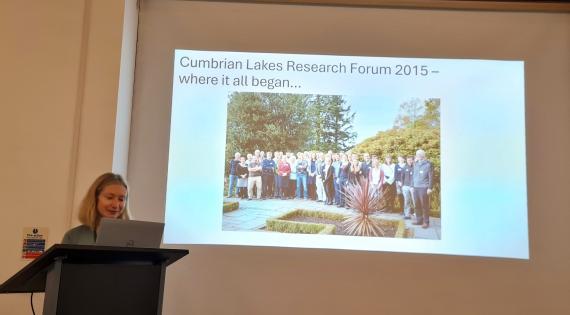
Ellie Mackay at the lectern with a slide showing a group photo and Cumbrian Lakes Research Forum 2015 - where it all began

Dr Ellie Mackay co-founded the Cumbrian Lakes Research Forum in 2015

Lori Lawson Handley, freshwater molecular ecologist at UKCEH, presented 10 years of environmental DNA monitoring of fish in Windermere. This is helping to develop indicators of lake fish communities and track distributions and populations of important species such as the rare Arctic Charr. Lori’s talk acknowledged the importance of the historic long-term fisheries data that had been collected by UKCEH to help validate and understand the contemporary trends and populations of fish in the Cumbrian lakes today.

Early career scientist Katrina Woodfield from Lancaster University detailed her living experiments in rivers upstream and downstream of lakes. Evidence of bottom-living algae proliferating in nutrient-poor systems inspired the investigation into whether these algae make use of organic nutrients. Typically, algae use inorganic nutrients which come from sewage or other human activity as these take less energy to uptake, but Katrina’s findings suggest an overlooked importance of organic forms.

Ruth Forrester, manager of the Love Windermere Partnership, presented the important work this partnership is doing, and how science and evidence have been used to develop their new action plan for the next two years. The importance of collaboration was highlighted. Ruth detailed some of the exciting projects that partners will be instigating to address nutrient and other water quality pressures faced by Windermere.

Linda May, deputy head of the Aquatic Ecosystems group, presented work from the international project “Futurelakes”. This is using case studies from across Europe to develop a blueprint to advise lake restoration practices. Linda’s long-standing research as part of UKCEH’s Loch Leven monitoring programme is an example of how community engagement and site-specific monitoring of nutrient loads can address nutrient pollution restoration efforts.

It was then my turn to present our findings from the first stakeholder workshop of the Pluralakes EU Water4all project. This project is tasked with developing visions and scenarios for positive lake futures in the Lake District. Further details can be found on a previous blog post. I wanted to highlight stakeholder discussions on the need to promote the positive collaborations and actions which are happening but are often unknown by the public and are poorly supported by current policies and governance.

Image
Presenter stands beside a lectern with a presentation slide in the background

Taylor Butler-Eldridge was back at the Forum with updates on his work examining the socio-cultural relationships between outdoor swimming and environmental health at Windermere

Image
Person stands beside lectern with presentation slide in the background

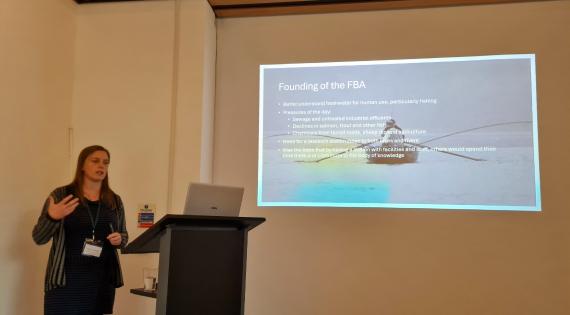
Louise Lavictoire of the Freshwater Biological Association described early days of monitoring

Louise Lavictoire, head of science at the Freshwater Biological Association, was the final speaker of the day and presented a fitting tribute to the pioneering scientists who established the Cumbrian Lakes Monitoring Programme as we know it today. Louise brought the 1930s to life with archive photographs and reports, and described how scientists used gas lamps to light their microscopes and engineered their own sampling equipment. She also celebrated the strength and tenacity of female scientists such as Winifred Frost, who donned fur coats and woollens while collecting fish traps and water samples in winter.

Interspersed among the presentations Ellie Mackay, UKCEH freshwater ecologist, led two workshops on the NC-UK Water Quality Digital Shadow project. This work is engaging stakeholders to co-design the interface of a digital shadow, which will integrate measured and modelled water quality data such as nutrient concentrations or loads, and phytoplankton biomass. During these sessions, participants discussed how they would use, navigate and access such a digital tool and its data outputs. A recurring theme was the importance of understanding different user motivations and technical levels.

Ecosystem and water quality models designed and used by UKCEH scientists are typically driven and validated by our long-term and statutory water quality monitoring data. Representatives from Badger Meter attended the day to give a live demo of their high-frequency in-situ water quality sensors, which are now typical components of water quality catchment monitoring programmes.

The event didn't just celebrate UKCEH research, but was an opportunity to recognise those who are passionate and tireless in their efforts to improve lake ecosystems and their catchments.

It gave us a chance to support each other and share ideas, with collaboration, responsibility and positivity running through every session. Until next year…

Heather Moorhouse


  • We produced a series of videos describing our monitoring in the Cumbrian Lakes. See the full playlist on our YouTube channel.