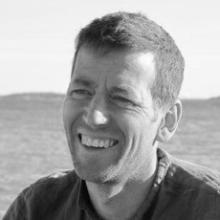
Dr Matt Heard
Current workMy research group has a diverse range of research interests. Our main aims are to understand i) what the key drivers causing declines in wildlife are, and ii) develop and evaluate actions to halt or reverse these declines. We study a range of taxa from plants, invertebrates to small mammals and birds and tackle these questions through experimentation, fieldwork, analyses of large datasets, and modelling. We often work in applied systems and try to ensure that our research is policy relevant. We work closely with other scientists, land managers and policy makers and strive to work with colleagues in other disciplines. My personal research currently focuses on the following areas:
Research interests
|
Brief CV
Reviewer for 15 journals and 2 grant awarding bodies. Selected publicationsMore than 80 published papers and contract reports. See also the NERC Open Research Archive. Salama, N.K.G, Edwards, G.R., Heard, M.S. & Jeger, M.J. (2010) The castration of Tragopogon pratensis by the autoecious, demicyclic, rust fungus Puccinia hysterium (2010) Fungal Ecology 3, 406-408 Woodcock, B.A., Redhead, J., Hulmes, L., Hulmes, S., Peyton, J., Pywell, R.F., Heard, M.S. (2010) Contrasting effects of local agricultural management and landscape structure on ground beetle biomass, species richness and functional diversity. Agriculture, Ecosystems and Environment (online early). Acreman, M.C., Harding, R.J., Lloyd, C., McNamara, N.P., Mountford, J.O., Mould, D., Purse, B.V., Heard, M.S., Stratford, C.J., Dury, S (2010) Trade-off in ecosystem services of the Somerset Levels and Moors wetlands. Hydrological Sciences Journal (in press) Carvell. C, Osborne, J.L., Bourke, A.F.G, Freeman,S.N. ,Pywell,R. F., Heard, M.S. (2010) Bumble bee species’ responses to a targeted conservation measure depend on landscape context and habitat quality Ecological Applications (in press) Hinsley, S.A., Redhead, J.W., Bellamy, P.E., R.K. Broughton, Hill, R.A., Heard, M.S. & Pywell, R.F. (2010) Testing agri-environment delivery for farmland birds at the farm scale: The Hillesden experiment. Ibis. In press. Bellamy, P., Croxton, P., Heard, M.S., Hinsley, S., Hulmes, L., Hulmes, S., Nuttall, P., Pywell, R.F., Rothery, P. (2009) The impact of growing miscanthus for biomass on farmland bird populations. Biomass and bioenergy 33, 191–199 Brooks, D.R., Perry, J.N., Clark, S.J., Heard, M.S., Firbank, L., Holdgate, R. Mason, N.S.,Shortall, S.R., Skellern, M.P., Woiwod, I.P. (2008) National scale metacommunity dynamics of carabid beetles in UK farmland. Journal of Applied Ecology 77, 265-274 Carvell, C., Rothery, P., Pywell, R.F.P., Heard, M.S. (2008) Effects of resource availability and social parasite invasion on field colonies of Bombus terrestris. Ecological Entomology 33, 321-327. Heard, M.S., Carvell, C., Carreck,N. L., Rothery, P., Osborne, J.L., Bourke, A.F.G. (2007) Landscape context not patch size determines bumblebee density on flower mixtures sown for agri-environment schemes Royal Society Biology Letters 3, 638-641 Silvertown, J., Poulton, P., Johnston, J., Edwards, G., Heard. M., Biss, P. (2006) The Park Grass Experiment 1856 - 2006: its Contribution to Ecology. Journal of Ecology 94, 801-814. Heard, M.S., Rothery, P, Perry, J. (2005) Modelling the impacts of genetically modified herbicide-tolerant crops on weed populations. Weed Research 45 (5) 1-8 M.J. Crawley, A.E. Johnston, J. Silvertown, M. Dodd, C. de Mazancourt, M.S. Heard, D.F. Henman & G.R. Edwards (2005) Determinants of species density on the Park Grass Experiment. American Naturalist 165, 179-192 J.N. Perry, L.G. Firbank, G.T. Champion, S.J. Clark, M.S. Heard, M.J. May, C. Hawes, G. R. Squire, P. Rothery, I.P. Woiwod and J.D. Pidgeon (2004) Ban on triazine herbicides likely to reduce but not negate relative benefits of GMHT maize cropping. Nature 428, 313-316 M. S. Heard, C. Hawes, G. T. Champion, S. J. Clark, L.G.Firbank, A.J. Haughton, A. M. Parish, J. N. Perry, P. Rothery, R. J. Scott, M. P. Skellern, G. R. Squire & M.O.Hill (2003) Weeds in fields with contrasting conventional and genetically modified herbicide-tolerant crops. 1. Effects on abundance and diversity. Philosophical Transactions of the Royal Society 358, 1819-1832 |

