• Agri-environment schemes support butterflies at key stages of life, from caterpillar to adult;
• A diverse mix of plants and habitats across farms provides the resources insects needs to thrive;
• Butterflies are indicators of a healthy environment;
• The findings add to growing evidence that nature-friendly farming delivers benefits for pollinators.
New research published today has found that agri-environment schemes (AES) support butterflies throughout their life cycle, providing the strongest evidence yet that nature-friendly farming is delivering benefits for wildlife across the countryside.
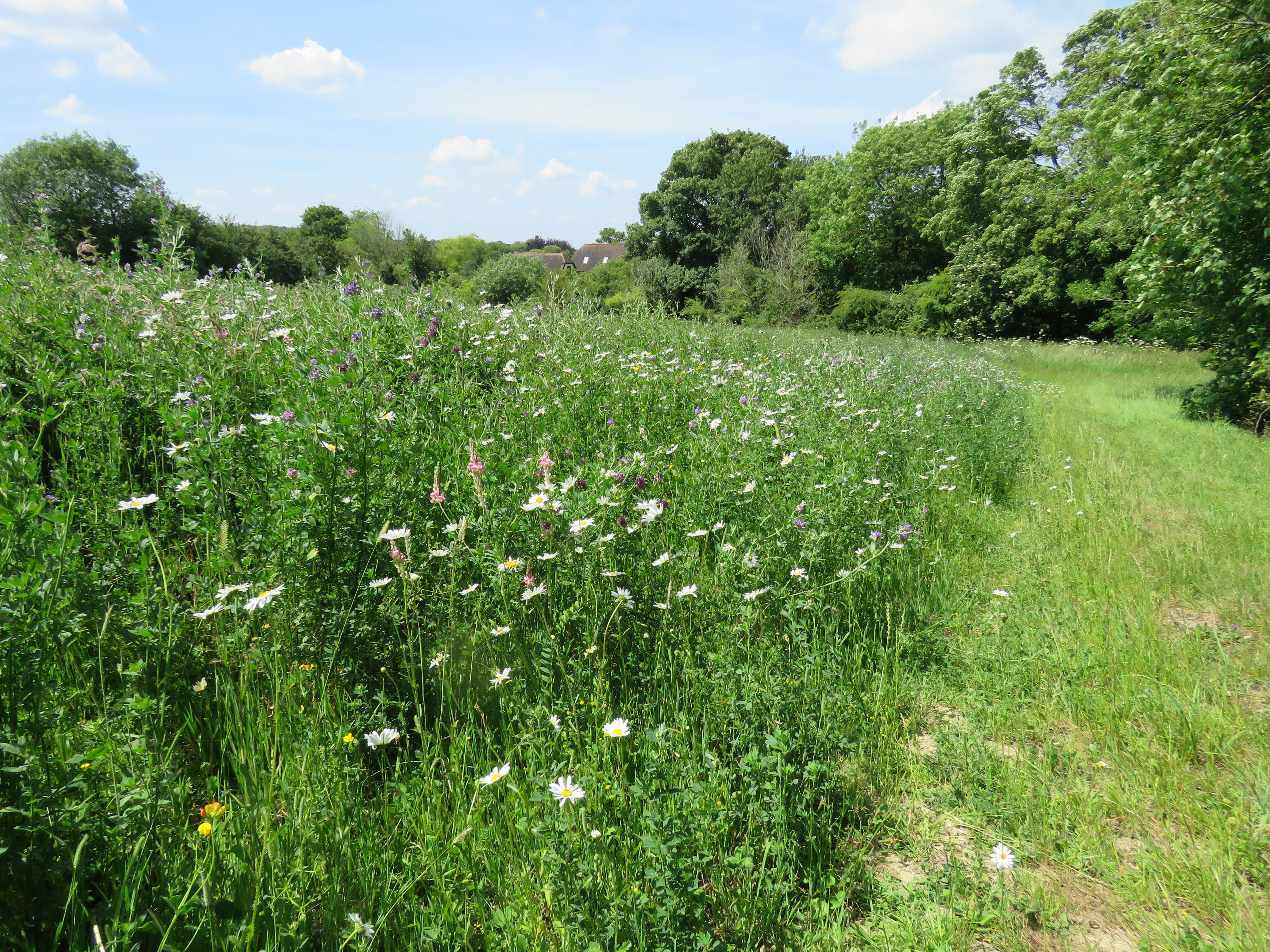
The study by researchers from the UK Centre for Ecology and Hydrology (UKCEH), Butterfly Conservation and the British Trust for Ornithology (BTO), found that environmental measures on farms do more than provide nectar-rich flowers for adult butterflies. They also help create the variety of plants and habitats needed by caterpillars, supporting butterflies from larva to adult. When butterflies and pollinators thrive, it's often a sign that the wider countryside is healthy too.
Agri-environment schemes (AES) support farmers and land managers for actions that benefit nature, such as creating flower-rich margins, managing grasslands and maintaining habitats for wildlife. While previous research has shown that these schemes can increase butterfly numbers, scientists have not always known exactly why.
For farmers and land managers, the research provides evidence that creating a range of habitats and plant species across a farm can support wildlife while remaining part of a productive farming landscape.
Using information collected across large areas of farmed countryside in six regions of England, researchers looked at butterflies, flowering plants and habitats to understand how different features of agri-environment schemes influence wildlife.
They found that areas under agri-environment management tended to support a greater variety of plants and more flowers alongside more butterflies and a wider range of butterfly species. The new analysis helped researchers show the positive effects of AES on butterflies link partly to the greater variety of plants, which they connected to food for caterpillars.
They also found butterflies whose caterpillars feed on grasses were more common where grass cover was greater. Because grasses provide food for caterpillars rather than adult butterflies, this provides extra evidence that these habitats are supporting butterflies at different stages of their lives, not simply attracting adults to flower-rich feeding areas.
UKCEH senior ecologist, lead scientist and co-author, Dr Joanna Staley, said: “We've known for some time that agri-environment schemes can benefit butterflies, but this research helps explain why. Our findings show that these schemes can provide the food and habitats butterflies need throughout different stages of their life cycle. That gives us greater confidence that nature-friendly farming can make a real contribution to wildlife recovery.”
Lead author Hannah Risser from Lancaster University said: “At a time when butterflies are facing a myriad of pressures, it's important that we understand which conservation measures are effective, and why. Our study showed for the first time that agri-environment schemes benefit butterflies throughout their life cycle, from caterpillar to adult. This highlights the importance of providing a wide range of habitats and food plants, rather than simply focusing on flowers for adult butterflies.”
Dr Lisbeth Hordley, Postdoctoral Researcher at Butterfly Conservation, co-author, said: “This study proves, that agri-environment schemes can provide nectar for adults, and most importantly, for the first time, that they can also create breeding habitats that butterflies need to build stronger populations. Species such as Small Heath, Gatekeeper and Small Skipper, which have shown significant declines in abundance since the 1970s, could benefit from agri-environment schemes interventions like grassy field margins, which provide these species with their larval host plants. We can use this research to advocate for the development of specific agri-environment schemes options to alleviate butterfly declines, helping to meet the legal Government target to prevent further biodiversity decline by 2030.”
The study drew on data from UKCEH's Landscape-scale species monitoring of agri-environment schemes (LandSpAES) programme, which uses advanced statistical analyses to examine how environmental measures affect wildlife across farm landscapes rather than individual fields alone.
By combining years of field surveys with a new analytical approach, researchers were able to identify the features most likely to be driving positive outcomes for butterflies.
The researchers say the findings are encouraging because they show how actions already being taken by many farmers can contribute to wider efforts to reverse biodiversity declines and support wildlife while helping create productive, resilient farming landscapes.
A resurvey of the same sites is underway by UKCEH which will conclude in 2029, to collect data to measure butterfly population change since this baseline survey. This will allow the researchers to find out whether these positive effects on adult butterfly abundance are also supporting butterfly populations over longer timescales.
ENDS
Notes to editors
• For interviews and further information, please contact: Lucy Preston, External Communications Officer, UKCEH. Email lucpre@ceh.ac.uk or call +44 (0)7920 295384.
• Images can be downloaded from here.
Paper information
• The full paper can be read in Agriculture, Ecosystems and Environment.
• Risser et al. Jan 2026. Benefits of agri-environment schemes for butterflies are mediated by botanical diversity and floral resource availability. Agriculture, Ecosystems and Environment. DOI 10.1016/j.agee.2026.110771. Open access.
• The study involved scientists from UKCEH, Butterfly Conservation and British Trust for Ornithology (BTO).
• Natural England funds the Landscape-scale species monitoring project (Staley et al., 2022 LandSpAES LM0465) and allowed the LandSpAES baseline data to be used for the analyses.
• This analysis was funded by Butterfly Conservation’s Heather Corrie Fund.
• These surveys are only possible thanks to access allowed by landowners, and the data collection undertaken by field surveyors.
About UKCEH
• The UK Centre for Ecology & Hydrology (UKCEH) is a leading independent research institute dedicated to understanding and transforming how we interact with the natural world. With over 600 researchers, we tackle the urgent environmental challenges of our time, such as climate change and biodiversity loss. Our evidence-based insights empower governments, businesses, and communities to make informed decisions, shaping a future where both nature and people thrive. www.ceh.ac.uk