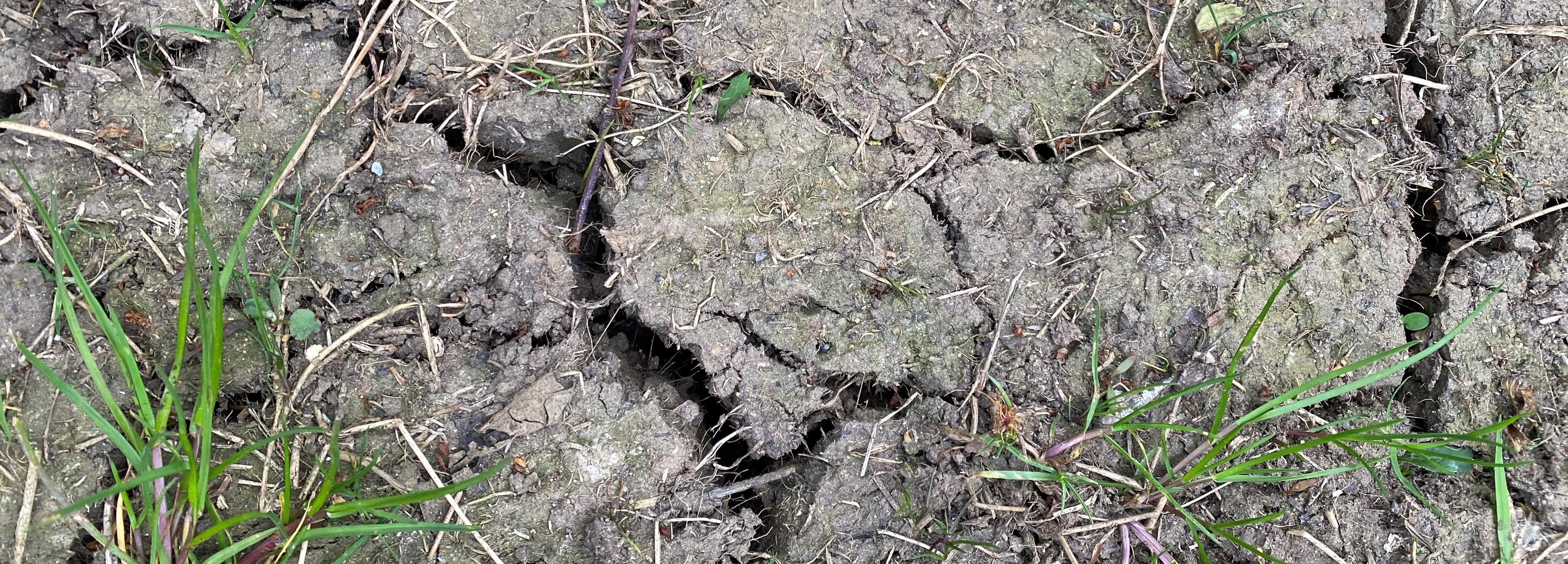
The 1976 drought remains one of the most severe hydrological events in the UK and is entrenched in the national memory. Fifty years on, scientists from the UK Centre for Ecology & Hydrology and other organisations are reflecting on the events of that famous summer and are exploring drought resilience in a changing climate.
Researchers and policymakers attended a British Hydrological Society conference on 17 June to mark the anniversary.
Speakers included Dr Glenn Watts and Jamie Hannaford of UKCEH; Professor David Hannah, climate scientist at the University of Birmingham and a UKCEH Trustee; and Philip Duffy and Helen Wakeham, CEO and water director, respectively, of the Environment Agency.
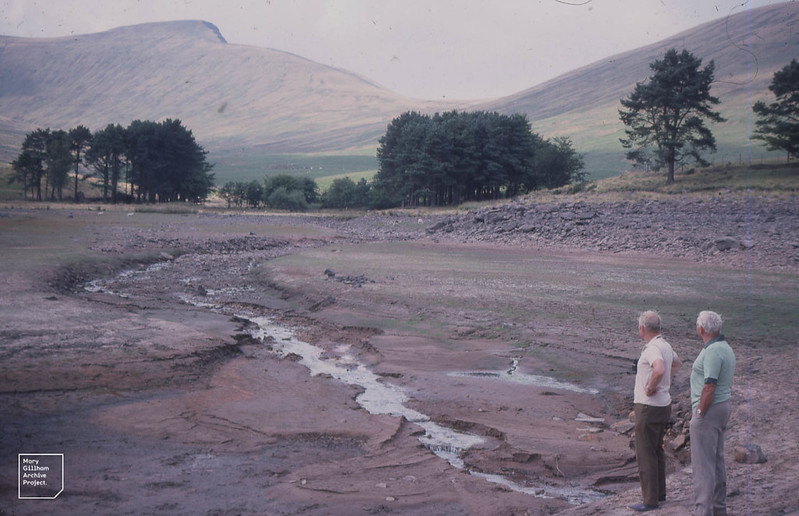
Dr Glenn Watts, UKCEH’s Associate Science Director for Water and Climate Science, looked back at the summer 1976 when there were:
-
Temperatures consistently over 30 degrees Celsius.
-
Record low river flows that were more severe than more recent droughts.
-
Water restrictions including shut-offs and standpipes in some areas.
-
Widespread parched soils and crop failures.
-
Massive swarms of ladybirds.
Dr Watts reflected on the social and environmental impacts and the actions taken by the water authorities.
Climate change impacts
It is still widely regarded as the benchmark UK drought because there were many months of exceptionally dry and warm weather leading up to summer 1976, with south-east England receiving less than half the long-term average rainfall over the previous winter which limited groundwater recharge. Understanding how catchments and ecosystems responded 50 years ago can inform better water management even today.
In contrast to 1975-6, more recent droughts have been preceded by wetter winters and develop quickly due to very hot and dry conditions, such as in 2022 and 2025. This is a ‘wake-up call’ because it demonstrated the impacts of climate change, said Jamie Hannaford, head of water resources and drought at UKCEH, in his presentation.
It is widely recognised that global warming will worsen droughts, though there is currently uncertainty about the severity. Mr Hannaford said stronger scientific evidence, achieved through enhanced monitoring to generate higher-quality data, alongside more advanced computer modelling, would improve projections and and strengthen drought preparedness in the UK.
Improving hydrological data and understanding
Long-term river flow records held by the National River Flow Archive (NRFA) provide the foundation for understanding hydrological variability across the UK, with many series extending back over 60 years. Drought indices and analysis by the National Hydrological Monitoring Programme (NHMP) enable consistent assessment of the severity of both floods and droughts.
Funded by the Natural Environment Research Council (NERC) as part of the UK’s National Capability for UK Challenges programme, the NRFA and NHMP provide vital historical context, supporting robust comparisons between historical events, like 1976 and more recent droughts, and supporting improved interpretation of emerging hydrological extremes in a changing climate.
The new Floods and Droughts Research Infrastructure (FDRI), funded by NERC, will provide new data and insights on the whole water cycle in different parts of the UK. It is a collaborative effort coordinated by UKCEH in partnership with Imperial College, University of Bristol and the British Geological Survey.
Researchers will use the data to improve predictions of how climate, river flows and groundwater will change at locations across the UK over coming decades, thereby supporting future water resource planning.
Dr Watts said: “We are already seeing the effects of climate change in the UK. Not only are there spells of hot, dry weather in spring and summer, but we are also getting wetter winters and more intense rainfall in all seasons, because a warmer atmosphere can store more water.
“This trend is expected to continue in coming decades, bringing both more severe droughts and increased river and surface water flooding. Our relationship with water will increasingly be whether there is too much or too little.”
UKCEH hydrologists created posters for the conference:
-
Comparing 1976 with other notable UK droughts (by Steve Turner, Rachael Armitage, Lucy Barker and Jamie Hannaford).
-
Examining what the 1976 drought would have looked like in today’s climate (Wilson Chan).
-
Our finding that the event could have been predicted a year in advance through studying oceanic and atmospheric changes (Amulya Chevuturi).
-
Examining climate change impacts on hydrological droughts across Great Britain (Rosanna Lane).
Compare current hydrological conditions to those in 1976 using the UK Water Resources Portal.
For more on the 1976 drought including audio recordings of people's experiences, visit our web page.